
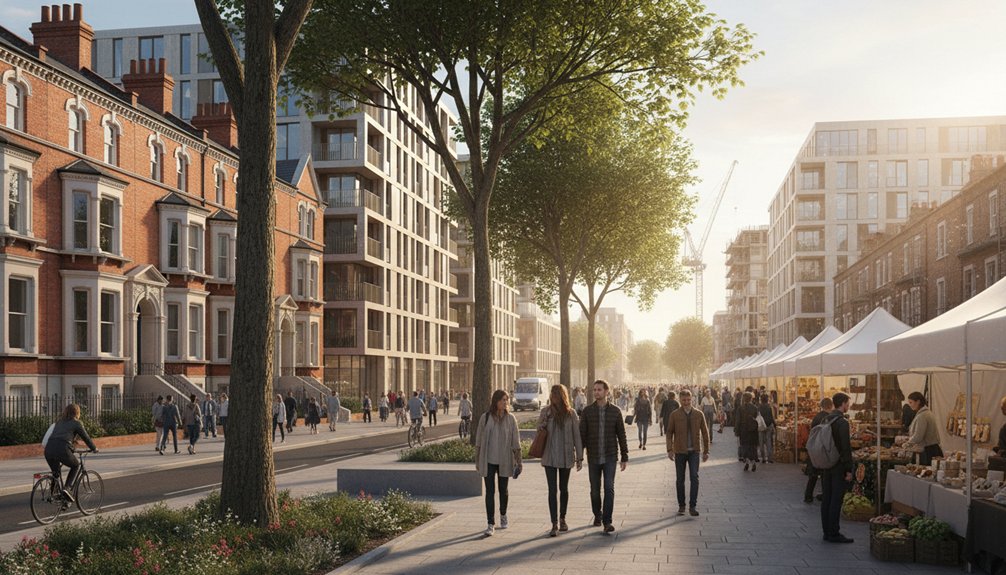
Walthamstow combines Victorian character with fast-changing regeneration, giving you both renovation potential and investment uncertainty. Improved transport, town-centre upgrades, new homes and projects around Blackhorse Lane are reshaping demand, while parks and cultural venues strengthen local appeal. You’ll need to weigh property condition, micro-location and delivery timelines carefully, because the most promising opportunity may not be where current prices suggest. Local regeneration could reward patient buyers—but only if you understand what’s changing next.
Key Takeaways
- Excellent Victoria line and Overground connections support Walthamstow’s long-term appeal for commuters and property buyers.
- Regeneration around Blackhorse Lane, Walthamstow Stadium, and the town centre is bringing new homes, workspaces, amenities, and improved public spaces.
- Compare micro-locations carefully, considering transport access, noise, local services, green spaces, development quality, and neighbourhood character.
- Period homes offer renovation potential, but buyers should budget for surveys, refurbishment, conservation restrictions, and possible structural or wiring problems.
- Assess leases, service charges, planned works, mortgage rates, rental demand, and resale prospects conservatively rather than assuming regeneration guarantees growth.
What Is Driving Walthamstow’s Growth?
Walthamstow’s growth is being driven by its improving transport links, relative value compared with neighbouring east London areas, and rising demand for well-connected family homes. You’ll find buyers attracted to quick Central London access, larger properties, and streets where thoughtful renovation can release meaningful value.
Local history strengthens the area’s identity, while cultural diversity supports an energetic high street, independent businesses, and broad rental appeal. For investors, that combination can create resilient demand across period terraces, conversions, and homes needing modernisation.
You should assess lease terms, condition, conservation constraints, and achievable post-works rents before committing, as refurbishment costs can quickly erode margins. Buyers who understand micro-locations, transport convenience, and future buyer preferences will be better placed to identify properties with both lifestyle appeal and long-term potential.
What Walthamstow Regeneration Projects Are Underway?
With investment focused on transport, town-centre renewal, and new housing, Walthamstow’s regeneration is reshaping demand beyond the main station corridors. You’ll see housing delivery around Blackhorse Lane, where new homes, workspaces, and improved public-realm connections support a broader buyer pool.
At Walthamstow Stadium, redevelopment plans are adding homes alongside employment and leisure uses, potentially strengthening the area’s rental appeal while increasing competition between new-build and older stock.
Transport upgrades and safer walking and cycling routes should improve access, but you’ll need to check phasing, service charges, and final specifications before pricing in uplift.
Meanwhile, Local art and cultural events continue to support neighbourhood identity, helping refurbished terraces and well-designed flats stand out.
For renovation, target properties with manageable works near emerging infrastructure, not merely headline proposals.
How Is Walthamstow Town Centre Changing?
As Walthamstow town centre evolves, buyers can expect stronger competition for homes near the market, High Street, and transport links, alongside continued pressure for better-designed shops, public spaces, and housing.
You’ll notice a more confident retail and café offer, improved pedestrian experience, and growing demand for flexible spaces that support independent businesses.
For investors, these changes can strengthen rental appeal and make tired flats or houses worth reassessing, particularly where practical renovations improve layouts, insulation, and kerb appeal.
Local market trends also suggest buyers increasingly value walkability, community amenities, and convenient connections over sheer floor space.
Track property pricing street by street, because presentation, lease terms, and proximity to improvements can create meaningful differences.
You’ll need to compare current condition with realistic refurbishment costs before committing, rather than relying on regeneration headlines alone.
Will New Homes Affect Walthamstow Prices?
As you assess Walthamstow’s new homes, weigh increased supply against demand to judge how prices may move.
Regeneration can lift values, but you’ll need to compare development quality, location and renovation potential with established properties.
For investors, these factors will shape rental demand, resale prospects and achievable returns.
New Supply and Demand
New-build delivery could reshape Walthamstow’s price growth, but it won’t affect every property equally. As additional flats and houses reach the market, you’ll gain more choice, yet competition may limit asking-price increases for dated homes that need substantial work. Developers’ incentives can also influence buyer expectations, particularly when purchasers compare turnkey finishes with renovation costs.
Market fluctuations will still reflect mortgage rates, employment confidence, and buyer motivations. You should assess whether new supply meets genuine local demand or simply concentrates similar units in one pocket.
For an investment, compare service charges, rental demand, resale appeal, and the discount required to improve an older property. A tired terrace with scope to extend may outperform a standard new flat if you budget accurately and target buyers seeking space.
Don’t assume every launch signals a stronger market; inspect comparable sales and absorption rates first.
Regeneration’s Price Impact
Regeneration can lift Walthamstow prices, but its effect depends on where new homes appear, how quickly they sell, and whether infrastructure keeps pace. If supply concentrates in one development, competing flats could soften nearby resale values while buyers compare incentives, layouts, and service charges.
Established homes may still benefit when improved streets, transport, schools, and public spaces strengthen buyer preferences. You should assess each micro-location rather than assume every property will rise equally.
Market fluctuations also matter: higher mortgage rates or weak employment can delay gains, even with impressive construction. For an investment, compare today’s price with realistic renovated value, rental demand, maintenance costs, and the likely completion schedule.
A tired house near improving amenities may offer more upside than a premium new-build, provided you budget carefully for refurbishment and avoid paying for regeneration before it arrives.
Which Areas Suit Different Buyers?
Your priorities will guide you towards Walthamstow’s best family areas, commuter-friendly neighbourhoods or investment-focused locations.
Look for schools, transport links and renovation potential alongside purchase prices and rental demand.
The right choice should match your lifestyle while protecting long-term value.
Best Areas for Families
For families, Walthamstow’s best fit depends on your priorities: period space and larger gardens around Upper Walthamstow, faster transport and renovation potential near Wood Street, or modern, lower-maintenance homes around Blackhorse Village.
Before you offer, compare local schools, catchment boundaries, childcare options and outdoor space, then check how each property could adapt as your family grows.
Upper Walthamstow often rewards buyers who can modernise older houses without erasing original character, while Wood Street may offer more scope to add value through extensions, loft conversions or energy upgrades.
Blackhorse Village suits you if you prefer newer construction, amenities and simpler maintenance, though service charges deserve scrutiny.
Visit during community events to judge neighbourhood atmosphere.
Prioritise layout, resale appeal and realistic improvement costs, not just asking-price discounts.
Commuter-Friendly Neighbourhoods
Which commute matters most—Liverpool Street, the City or flexible hybrid travel? Choose your base around that answer.
Walthamstow Central suits you if you value fast Victoria line access, cafés and a broad resale audience.
From St James Street, you’ll reach Overground services and the market quickly, while nearby terraces can reward thoughtful upgrades such as improved insulation, a reworked kitchen or a garden office.
Blackhorse Road appeals if you want modern apartments, creative workspaces and straightforward Victoria line travel; check service charges and lease terms carefully.
If you work flexibly, Wood Street offers quieter streets, Overground connections and more scope for renovation, though you’ll trade some central convenience.
Explore Local culture before buying: independent shops, venues and genuine community engagement can shape your daily experience.
Prioritise walkability, transport reliability and adaptable layouts over cosmetic presentation alone.
Investment-Focused Locations
If investment potential is driving your search, match the location to your strategy rather than chasing the lowest asking price. For dependable rental demand, focus on areas near Walthamstow Central, Blackhorse Road, and excellent schools, where commuters and families support occupancy.
If you’re targeting capital growth, investigate pockets around Blackhorse Lane and the market’s edges, where regeneration, workspace, and transport improvements could reshape values.
Look beyond headline prices: compare rental yields, lease length, service charges, and resale appeal before committing.
A tired terrace may offer upside if you can reconfigure space, upgrade insulation, and secure planning permission, but budget renovation risks carefully.
Track the local market and property trends, then test your assumptions against recent comparable sales.
You’ll achieve stronger returns by buying well, improving intelligently, and avoiding overpaying for speculative potential.
Which Transport Links Could Add Value?
Transport links can add meaningful value in Walthamstow, particularly when they improve your daily commute, widen the buyer pool, or strengthen rental demand. Victoria line services from Walthamstow Central offer fast access to central London, while Overground connections support journeys across north and east London.
You should also assess nearby bus routes, cycle infrastructure, and station upgrades, as reliable Public transit often commands a premium from commuters and tenants.
Planned improvements to transport infrastructure could make homes near underused stations more attractive, but you shouldn’t price in unconfirmed promises.
When comparing properties, measure walking times, service frequency, reliability, and noise exposure.
A tired house within a strong transport catchment may justify renovation, especially if you can create a better layout, home office, or low-maintenance finish without overcapitalising.
Verify proposals, funding, and delivery dates before investing.
How Are Walthamstow’s Parks Improving?
You’ll find Walthamstow’s parks benefiting from enhanced green spaces that can strengthen local appeal and support property values.
New recreational facilities should make nearby homes more attractive to families, renters, and future buyers.
As you assess renovation potential, consider how park improvements could boost both lifestyle appeal and long-term investment returns.
Enhanced Green Spaces
Walthamstow’s parks are becoming stronger selling points as investment brings better play areas, greener planting, improved paths and more welcoming community spaces. When you view homes nearby, you’ll see how these upgrades can strengthen day-to-day appeal and support future resale value.
Refreshed planting schemes and healthier trees create attractive outlooks, while improved drainage and maintenance make green areas more usable year-round. Habitat improvements also support urban wildlife, giving neighbourhoods a more distinctive environmental character.
Community gardening projects can add local pride, encourage residents to care for shared spaces and make streets feel more settled. For buyers, this renovation-led progress matters: well-managed parks can increase rental appeal, help protect property desirability and reinforce Walthamstow’s wider regeneration story.
Check funding, delivery dates and management plans before treating every proposed improvement as guaranteed.
New Recreational Facilities
New recreational facilities are making Walthamstow’s parks more useful and commercially appealing, with upgraded play areas, outdoor gyms, sports courts and flexible spaces for community events. As a buyer, you’ll see how these improvements support healthier routines and stronger neighbourhood activity.
Better lighting, seating, paths and changing facilities can increase everyday usability, helping parks attract families, runners and local sports groups. That activity adds practical value to nearby homes, particularly where residents prioritise outdoor recreation and walkable amenities.
You should still assess maintenance budgets, usage levels and planned upgrades before committing, as quality can vary between sites. However, well-designed facilities often strengthen an area’s appeal, support local businesses and improve resale prospects.
For investors, parks that combine leisure, safety and programming offer a persuasive regeneration signal.
Which New Amenities Could Boost Demand?
As Walthamstow attracts more buyers and renters, amenities such as improved transport links, flexible workspaces, independent retail, and high-quality leisure facilities could lift demand further.
You’ll see the strongest effect where new facilities complement existing neighbourhood character rather than replace it. A well-designed market, better cafés, and local food halls could increase footfall and support nearby shops.
Modern coworking hubs may also attract professionals seeking shorter commutes, strengthening weekday demand for renovated flats.
While large Shopping centres could broaden retail choice, smaller independent businesses often create a more distinctive identity and support premium pricing.
If you’re upgrading a property, prioritise adaptable layouts, efficient kitchens, and attractive communal space to appeal to these tenants and buyers.
Luxury apartments near improved amenities could command stronger rents, resale interest, and long-term investment appeal.
What Risks Should Walthamstow Buyers Consider?
While Walthamstow offers strong regeneration and rental potential, buyers should assess risks beyond the asking price. Market fluctuations can affect resale values, mortgage affordability, and renovation budgets, so you shouldn’t assume recent growth will continue.
Inspect older terraces carefully for damp, subsidence, outdated wiring, roof defects, and unapproved alterations. These issues can turn an apparently affordable purchase into an expensive project, particularly where conservation controls limit external changes.
You’ll also need to check lease length, service charges, planned major works, and any restrictions affecting extensions or conversions.
Buyer misconceptions often include treating every regeneration announcement as guaranteed value growth or assuming high rental demand removes void risk.
Before committing, obtain an independent survey, verify planning history, and price realistic contingencies for materials, labour, delays, and compliance.
How Should You Assess Walthamstow’s Investment Potential?
To assess Walthamstow’s investment potential, compare realistic purchase and renovation costs with achievable resale values or rents rather than relying on headline growth. Study Historical property trends by street, property type and tenure, then check whether recent gains reflect sustainable demand or temporary competition.
Your appraisal should include stamp duty, financing, surveys, permissions, contractor costs, contingency and selling fees. For a rental strategy, stress-test mortgage payments, voids, maintenance, compliance and achievable yields against conservative rent estimates.
Evaluate Local economic factors, including transport connectivity, employment, schools, amenities and regeneration timelines, while distinguishing funded projects from proposals. Inspect comparable renovated homes, not just asking prices.
Finally, model cautious, base and optimistic scenarios, allowing for slower sales, higher material costs and changing rates. If the numbers work conservatively, the opportunity deserves closer due diligence.
Frequently Asked Questions
What Are Walthamstow’s Council Tax Bands and Typical Annual Charges?
You’ll find Walthamstow council tax bands A–H, with typical annual charges roughly £1,400–£4,300, varying by borough. Check your exact bill before evaluating Property value or Investment potential, especially when budgeting renovation costs and yields.
How Competitive Is Walthamstow’s Rental Market for Landlords and Tenants?
You’ll find Walthamstow’s rental market a tug-of-war: strong Market demand supports landlord competition, while tenants scrutinise Rental affordability. Renovate strategically, price competitively, and assess yields carefully; transport links and amenities can protect long-term investment performance.
What Schools Serve Walthamstow, and How Are Admissions Determined?
You’ll find primary and secondary schools across Walthamstow, including academies and faith schools. Compare school rankings, then check each admission criteria: distance, siblings, faith, and entrance tests can influence demand and investment appeal.
Are Leasehold Restrictions Common in Walthamstow Flats?
Yes, you’ll often encounter leasehold complexities in Walthamstow flats, including consent requirements, service charges, and subletting rules. Check terms carefully before renovating; compare freehold options if long-term flexibility and investment resilience matter.
What Should Buyers Know About Walthamstow’s Flood Risk and Insurance Costs?
You should check Environment Agency flood maps, drainage history, and lease documents before buying. Budget for Flood mitigation, while comparing Insurance premiums; resilient renovations can reduce risk, protect resale value, and support stronger investment returns.
Conclusion
Walthamstow’s future looks reassuringly unfinished—which is precisely the opportunity. You can buy into improving transport, greener spaces, new homes and evolving cultural quarters, then add value through thoughtful renovation. Yet progress won’t lift every street equally, and promised infrastructure may arrive fashionably late. Assess each micro-location, service charge, rental demand and construction timeline before committing. If you balance optimism with due diligence, you won’t just follow regeneration—you’ll position your property to benefit from it.