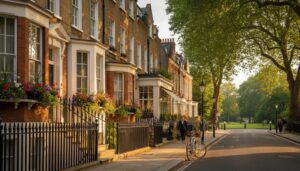
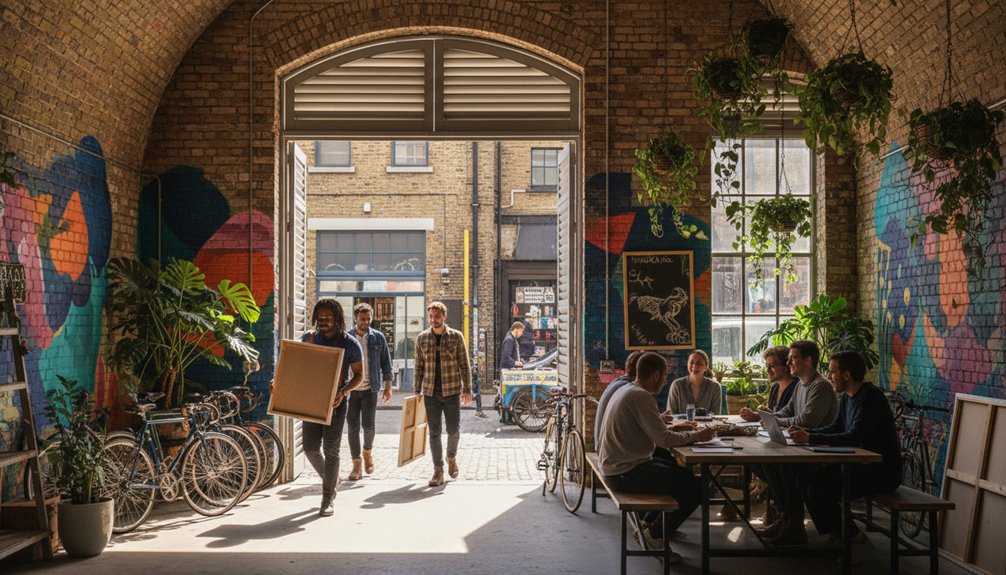
If you explore Peckham, you’ll find Victorian terraces, railway arches, and industrial façades forming a distinctive backdrop for contemporary creativity. You can move from independent galleries and adaptable studios to cafés, markets, live music venues, and mural-lined streets, where Caribbean influences shape the area’s visual identity. Its affordable spaces and community-led projects encourage collaboration, while sustainable reuse keeps its heritage active. Yet Peckham’s appeal lies in how these elements connect—and what they reveal about London’s changing creative culture.
Key Takeaways
- Peckham’s Victorian terraces, railway arches, and industrial façades provide distinctive, affordable spaces for studios, galleries, cafés, and venues.
- Its independent arts scene supports exhibitions, performances, workshops, screenings, and collaborations across diverse creative disciplines.
- Iconic nightlife venues offer flexible spaces for live music, DJs, theatre, spoken word, and experimental performances.
- Street art, murals, markets, and Caribbean influences create a distinctive visual identity rooted in local history and contemporary expression.
- Independent businesses, makers’ markets, community projects, and informal gathering places encourage collaboration, cultural exchange, and creative entrepreneurship.
Why Peckham Appeals to Creative Communities
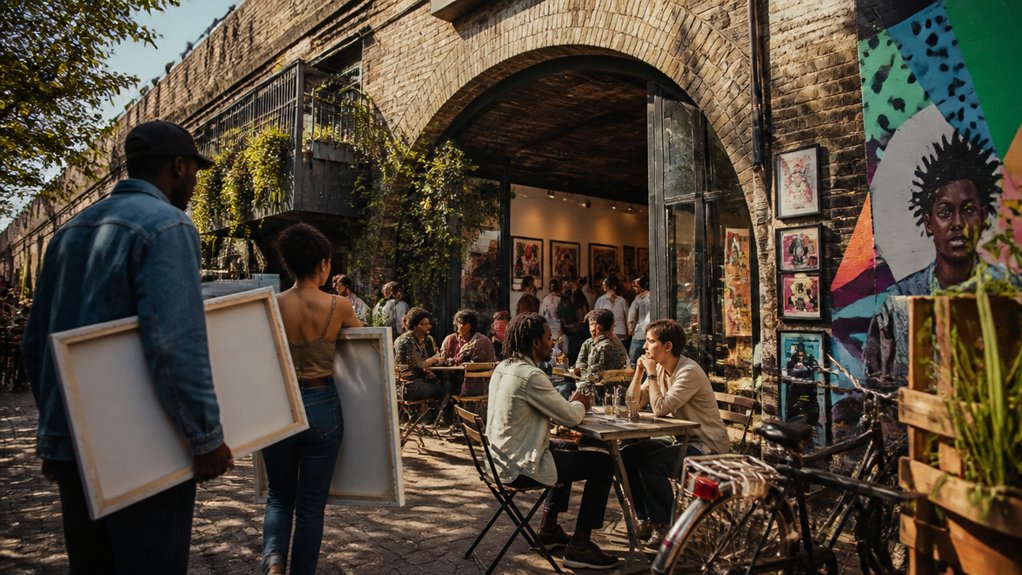
Peckham appeals to creative communities because it combines a strong sense of heritage with an open, experimental spirit. As you explore the area, you’ll notice how Victorian terraces, railway arches, and well-preserved shopfronts create a distinctive visual language. These details give designers, makers, and residents a tangible connection to place without restricting new ideas.
Cultural diversity shapes Peckham’s character, bringing different languages, cuisines, traditions, and design references into everyday life. You can experience that richness in the streets, markets, schools, and community spaces, where local identity remains active rather than decorative.
Peckham’s Historical significance also matters: its changing industries, transport links, and migration stories provide layers that reward close attention. Together, heritage and adaptability make the neighbourhood feel authentic, spacious, and creatively energising for you.
Peckham’s Independent Arts and Culture Scene
When you explore Peckham’s independent arts scene, you’ll find exhibitions, screenings, performances, and workshops rooted in the area’s distinctive buildings and diverse communities. Local art galleries occupy railway arches, converted shops, and carefully adapted civic spaces, pairing contemporary work with Peckham’s layered architectural character.
You can move from photography and painting to experimental film, theatre, and live music within a few streets, often discovering programmes shaped by local histories and urgent social questions.
Community workshops invite you to make, debate, and learn alongside neighbours, while festivals animate streets, courtyards, and heritage landmarks with thoughtful design and inclusive programming.
Notice how these organisations preserve the neighbourhood’s informal spirit: hand-built displays, bold posters, and welcoming entrances make culture feel accessible rather than ceremonial.
You’re not simply observing; you’re participating in Peckham’s evolving cultural story.
Artist Studios and Affordable Creative Spaces
Beyond galleries and performance venues, Peckham’s artist studios occupy railway arches, former workshops, and adaptable commercial units, keeping creative work visible within the neighbourhood’s historic fabric.
As you explore these spaces, you’ll notice original brickwork, saw-toothed roofs, steel columns, and carefully inserted partitions shaping practical environments for making.
Shared leases and cooperative management help keep rents more attainable than central London alternatives, while affordable workshops give emerging artists room to develop without sacrificing character.
You’ll also find photographers, ceramicists, designers, painters, and craftspeople working side by side, exchanging skills and equipment.
Studio collaborations grow naturally from this proximity, linking disciplines through open days, commissions, and informal critiques.
For you, that blend of affordability and architectural texture makes Peckham’s studios more than workspaces: they’re resilient, visible foundations for the area’s evolving creative identity.
Live Music and Performance Venues in Peckham
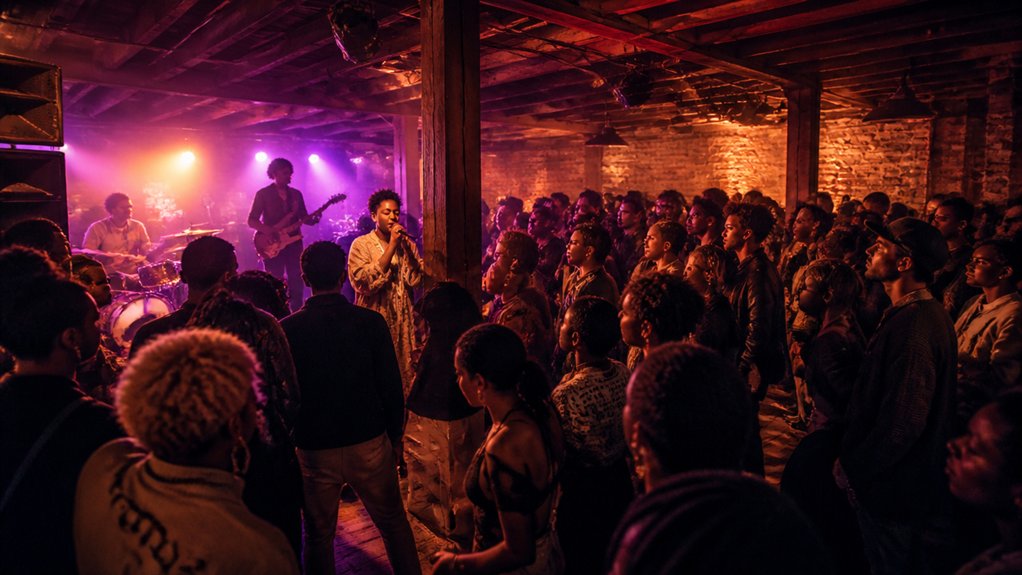
You’ll find Peckham’s iconic live music venues woven into its changing architectural fabric, from repurposed high streets to characterful railway arches.
Independent performance spaces give you intimate stages for emerging artists, carefully balancing heritage details with inventive design.
After dark, Peckham’s creative nightlife brings these rooms, rooftops, and courtyards into a lively cultural network.
Iconic Live Music Venues
Peckham’s live music venues give the neighbourhood’s creative identity a physical pulse, pairing distinctive architecture with programmes that range from emerging local acts to established performers.
At the Bussey Building, you’ll find industrial steelwork, weathered brick and rooftop views framing concerts with unmistakable character. The CLF Art Lounge, housed within the Bussey complex, adds carefully curated sound, lighting and late-night energy to this evolving cultural landmark.
Together, these venues show how urban regeneration can preserve architectural memory while accommodating contemporary production. You’ll hear cultural diversity in their line-ups, where grime, jazz, soul, indie and electronic music share the same stage.
Their visual identity matters, too: bold posters, exposed structures and adaptable rooms make every visit feel connected to Peckham’s creative, layered history and confident future.
Independent Performance Spaces
Independent performance spaces give Peckham’s cultural life an intimate, adaptable setting, where live music, theatre and experimental work unfold beyond conventional stages. You’ll find former workshops, railway arches and modest halls repurposed with care, their exposed brick, timber floors and visible services shaping each encounter.
These venues support emerging musicians, performance art and experimental theater, often giving artists greater freedom than larger institutions can offer. You might sit close enough to notice a performer’s breath, or watch a set transform an unpolished room through light, sound and movement.
Their flexible layouts preserve Peckham’s practical heritage while welcoming inventive design. Rather than presenting culture as a finished product, they invite you to share the process, meet local makers and experience work that feels immediate, specific and genuinely connected to its surroundings.
Peckham’s Creative Nightlife
As evening settles, Peckham’s creative nightlife turns former workshops, railway arches and compact halls into lively stages for music and performance. You can follow bass lines through brick-lined corridors, where exposed beams, enamel signs and carefully restored industrial details frame emerging bands.
At venues such as the Bussey Building, CLF Art Lounge and The Montpelier, you’ll find live sets, spoken-word nights, DJ sessions and experimental theatre rather than a single, predictable scene. These nightlife venues preserve Peckham’s working past while giving contemporary artists room to test new ideas.
Check listings before you go, as late night events often shift between intimate courtyards, rooftop terraces and adaptable interiors. You’ll encounter a social atmosphere shaped by design: salvaged materials, inventive lighting and audiences who value both cultural texture and creative risk.
Cafés, Markets, and Creative Meeting Places
You’ll find independent cafés where restored façades, considered interiors, and locally roasted coffee shape Peckham’s daily rhythm.
At vibrant markets, you can browse handmade goods and produce amid a lively blend of heritage stalls and contemporary design.
Creative gathering spaces then bring artists, makers, and neighbours together around shared tables and fresh ideas.
Independent Cafés
Wander beyond Peckham’s grand terraces and you’ll find independent cafés occupying converted shops, former workshops, and modest corner units, where original brickwork, reclaimed timber, and thoughtful lighting create settings as distinctive as the coffee.
You can trace Peckham’s urban renewal through these carefully adapted interiors: terrazzo counters sit beside salvaged doors, while local prints and ceramics give each room a personal identity.
More than convenient places to pause, they reflect community activism, with owners supporting neighbourhood artists, hosting small exhibitions, and creating welcoming tables for conversation.
You’ll notice how baristas remember regulars, recommend nearby studios, and connect visitors with the area’s creative rhythm.
These cafés preserve traces of working Peckham while offering flexible, informal spaces where design, hospitality, and cultural exchange meet naturally.
Vibrant Local Markets
From the cafés’ conversational tables, Peckham’s creative life extends into vibrant local markets, where trading, making, and meeting share the same public space. You’ll find local food arranged beneath railway arches, Victorian terraces, and carefully renewed industrial façades, giving each market a distinct sense of place.
Seasonal produce, sourdough, preserves, and regional cheeses reflect London’s changing tastes while keeping older traditions visible. At artisan stalls, you can examine hand-thrown ceramics, woven textiles, illustrated prints, and small-batch fragrances, each object carrying its maker’s fingerprints.
Market signage, timber trestles, painted awnings, and reused crates create an informal visual language that complements Peckham’s architectural character. As you browse, you’ll notice how traders protect neighbourhood knowledge, celebrate craft, and make everyday shopping feel richly connected to the area’s heritage.
Creative Gathering Spaces
How do Peckham’s cafés, markets, and studios become more than places to pause or purchase? They invite you into the neighbourhood’s creative rhythm, where conversation, craft, and community overlap.
You can settle beneath original shopfronts, tiled façades, or restored industrial details, then discover independent makers shaping contemporary culture. At Rye Lane’s markets, you’ll find food, textiles, records, and ideas exchanged across generations.
Local cafés double as informal meeting rooms, while studios host exhibitions, workshops, and collaborations that keep Peckham’s heritage active rather than preserved behind glass.
Thoughtful urban design connects these destinations through walkable streets, adaptable spaces, and welcoming thresholds. You’ll also notice environmental sustainability in refill stations, seasonal produce, reclaimed furniture, and low-waste events.
Together, these gathering places make creativity feel accessible, social, and distinctly Peckham.
Street Art and Peckham’s Distinctive Identity
Peckham’s street art turns walls, railway arches, and shopfronts into a living record of the neighbourhood’s creative identity. As you walk Rye Lane and the surrounding streets, you’ll notice layered stencils, bold lettering, pasted posters, and carefully composed murals responding to brickwork, signage, and passing traffic.
Each surface carries local memory while welcoming new interpretations, making the area feel designed rather than merely decorated. This visual language reflects Peckham’s changing history: Caribbean influence, independent enterprise, and contemporary experimentation share space without becoming museum pieces.
You can read urban renewal in the restored arches and repurposed façades, yet street culture keeps the district informal, expressive, and slightly unpredictable. The strongest works respect their setting, using colour, scale, and texture to sharpen Peckham’s distinctive identity.
How Peckham Builds Creative Community Connections
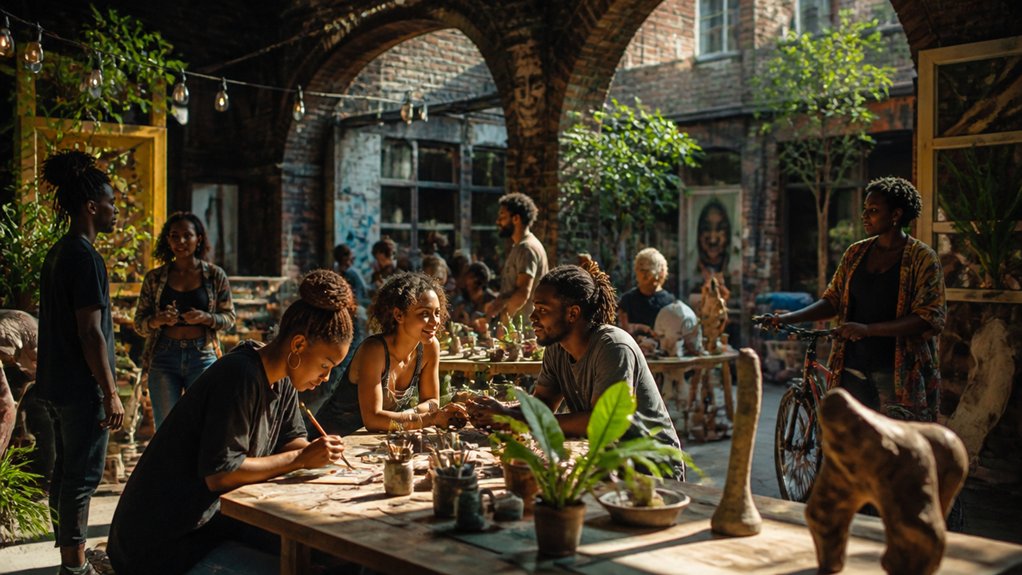
When artists, traders, residents, and visitors share Peckham’s streets, creative connections form through everyday encounters rather than formal institutions alone. As you explore Rye Lane, you’ll notice how shopfronts, murals, market stalls, and railway arches create a textured public landscape where ideas travel easily.
Independent cafés host critiques, makers’ markets, and informal introductions, while libraries, studios, and youth projects offer more consistent spaces for learning and collaboration. Community engagement gives these relationships purpose: residents help shape events, protect local character, and welcome new creative voices without erasing established traditions.
Thoughtful urban renewal can support this exchange when it improves access, preserves adaptable buildings, and respects Peckham’s layered heritage. You’ll find that its strongest networks grow through repeated encounters—shared benches, familiar faces, and collective care for the neighbourhood’s evolving visual identity.
Conclusion
Peckham’s creative appeal lies in how its heritage and reinvention work side by side. As you move from Victorian terraces and railway arches to studios, galleries, cafés, and performance spaces, you’ll find a neighbourhood where ideas travel easily. Murals, markets, and Caribbean influences give its streets a distinctive visual language, while community initiatives keep opportunities open. Peckham doesn’t simply host creativity; it acts as a living loom, weaving history, design, culture, and collaboration into London’s future.