
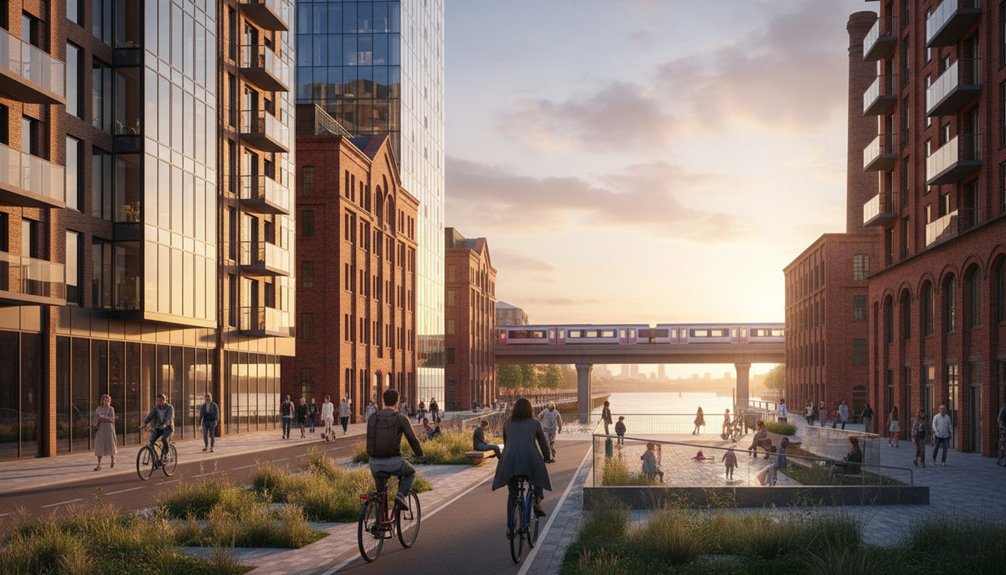
What if your next home came with a past worth preserving and a future still taking shape? In Woolwich, you’ll find Georgian and Victorian character alongside carefully planned regeneration, from restored historic buildings to new riverside housing. Improved links on the Elizabeth line, DLR, and river services add practical value, while markets, cultural venues, and public spaces strengthen local life. Yet the balance between investment, affordability, and heritage raises important questions worth considering.
Key Takeaways
- Woolwich combines Georgian terraces, Victorian industrial buildings, Royal Arsenal warehouses, riverside spaces, and modern apartments, creating a distinctive sense of place.
- Regeneration is delivering new homes, amenities, employment opportunities, and improved public spaces while protecting important heritage assets.
- Elizabeth line, DLR, National Rail, buses, and river services provide strong connections across London, with Woolwich Arsenal offering frequent, accessible interchanges.
- Housing ranges from Victorian terraces and warehouse conversions to affordable schemes, studios, family homes, and riverside apartments at varied price points.
- Residents should budget for housing, utilities, council tax, transport, and maintenance, while considering flood risk, listed-building restrictions, and future development impacts.
Why Woolwich Is Attracting New Residents
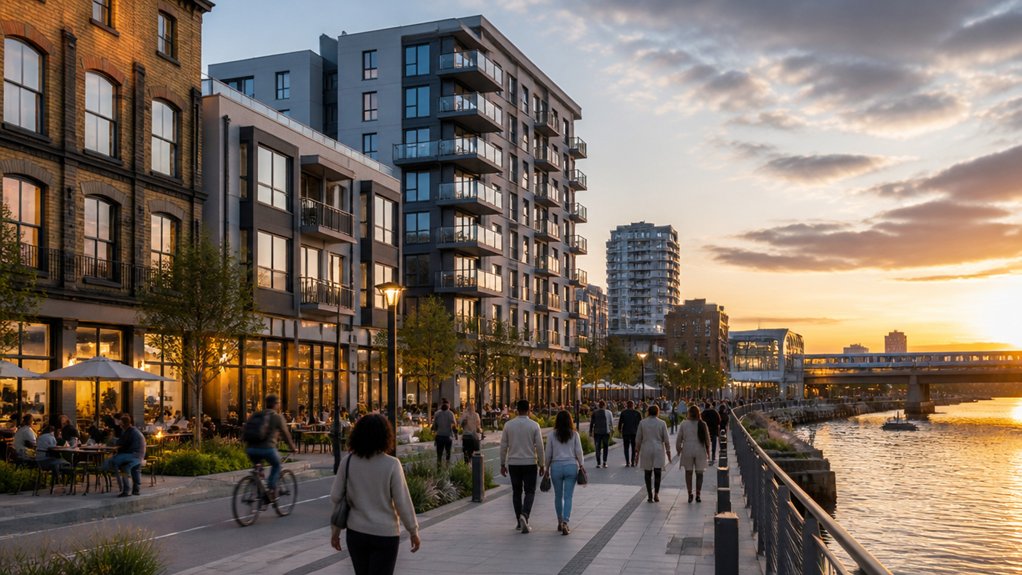
Woolwich is attracting new residents because it offers a rare balance of heritage and everyday convenience. As you explore the area, you’ll find Georgian terraces, military landmarks, and historic dockside buildings alongside practical shops, schools, and transport links. This layered townscape gives daily life a distinctive sense of place without sacrificing accessibility.
Community diversity strengthens Woolwich’s appeal. You can experience different traditions through independent businesses, cafés, community groups, and welcoming public spaces. Conservation areas help protect the architectural character that makes the neighbourhood recognisable.
Cultural events add further energy, from local exhibitions and performances to seasonal gatherings that bring residents together.
You’ll also benefit from riverside walks, open parks, and the shared civic identity created by Woolwich’s long history. For many buyers and renters, that combination feels both authentic and *invigoratingly* liveable.
How Woolwich Regeneration Is Changing the Area
As you explore Woolwich’s regeneration, you’ll see new homes and amenities taking shape alongside its historic streets and protected heritage.
Transport improvements are making the area more connected, while careful conservation helps retain its distinctive character.
You’ll also find rising investment creating jobs and supporting a stronger local economy.
New Homes And Amenities
As regeneration gathers pace, Woolwich is gaining new homes and amenities while retaining the historic character that defines the district. You’ll see carefully planned apartments rising beside converted warehouses, with brickwork, arches, and historic façades preserved wherever possible. This approach gives you contemporary insulation, efficient layouts, and balconies without erasing Woolwich’s maritime and military legacy.
Affordable housing forms part of several developments, helping more local people remain within the community as the area evolves. New Community facilities, including nurseries, flexible workspaces, health services, and meeting rooms, add everyday convenience and encourage neighbours to connect.
Public squares and landscaped courtyards soften denser schemes, while heritage interpretation helps you understand each site’s past. Conservation-led design guarantees new buildings complement, rather than imitate, historic landmarks, creating a welcoming, balanced neighbourhood for residents and visitors alike.
Transport Network Improvements
Better homes and amenities matter more when you can reach them easily, and Woolwich’s transport improvements are reshaping how the district connects with London. Elizabeth line services have shortened journeys into central London, while the DLR and National Rail continue to support practical local travel.
You’ll also benefit from better links between the station, riverside, Arsenal, and historic Royal Arsenal buildings, helping you explore without overwhelming their industrial character.
Regeneration is adding clearer walking routes, safer crossings, and improved public-realm details around listed and locally valued structures. New bike infrastructure encourages shorter journeys by cycle, while charging points support the growing use of an Electric vehicle.
These changes should make daily travel more flexible, but careful design matters: lighting, signage, and paving must respect Woolwich’s heritage while improving accessibility. You can connect more easily without losing the area’s distinctive sense of place.
Jobs And Investment Growth
What does regeneration mean for Woolwich beyond new buildings and improved transport? It means you’ll see a broader employment base take shape around the Royal Arsenal, town centre and riverfront.
Former military workshops and listed industrial structures now frame studios, offices, hospitality venues and cultural enterprises, proving that conservation can support productive new uses. This Economic diversification reduces reliance on a single sector while protecting Woolwich’s distinctive character.
Business incentives, improved public environment and workspace investment are attracting smaller firms alongside established employers. As you explore the area, you’ll notice cafés, independent retailers and professional services creating everyday jobs, not merely construction roles.
New housing and commercial schemes should also strengthen local spending, provided developers respect historic streetscapes and deliver training for residents. That balance can make development durable, inclusive and genuinely rooted in Woolwich’s heritage.
What Can You Buy or Rent in Woolwich?
Whether you’re seeking a period terrace, a converted warehouse, or a modern riverside flat, Woolwich offers homes to buy or rent across a varied historic setting. You’ll find Victorian terraces near conservation areas, where brick façades, sash windows, and original cornices reward careful maintenance.
Former industrial buildings add character through exposed structure, generous proportions, and sensitive conversions, while newer developments provide efficient layouts beside the river and Elizabeth line.
You can choose compact studios, family houses, shared-ownership properties, or Affordable housing schemes, depending on availability and eligibility.
Luxury apartments typically occupy landmark riverside developments, pairing contemporary finishes with views across the Thames.
Before committing, inspect listed-building constraints, communal repairs, flood considerations, and the quality of any alterations.
A local agent can help you compare tenure, condition, heritage significance, and transport access.
How Much Does Living in Woolwich Cost?
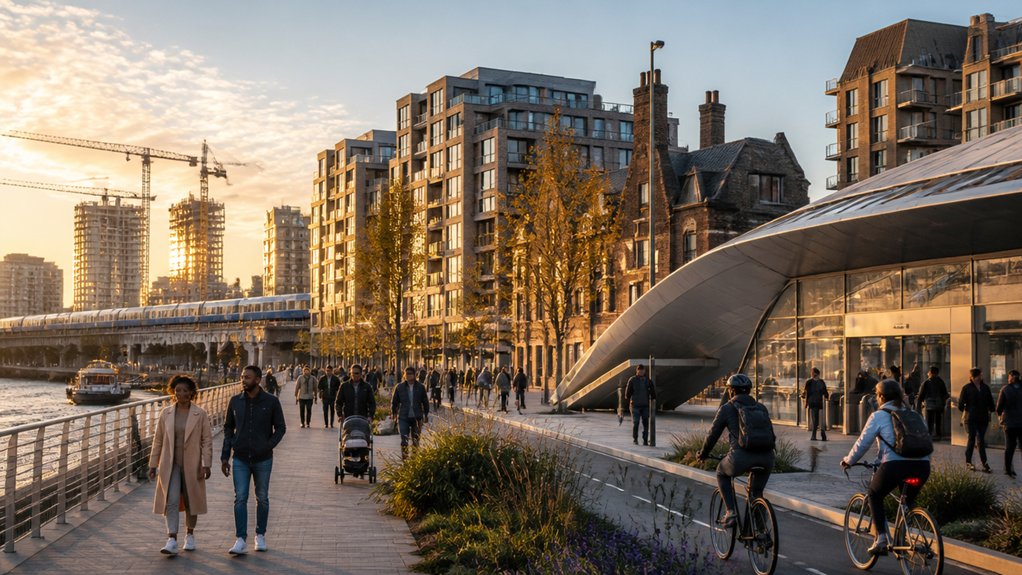
When you budget for Woolwich, you’ll weigh property prices and rent alongside the character of conservation areas and heritage homes.
You’ll also account for daily living expenses, from groceries and services to upkeep on older buildings.
Transport fares and council costs complete the picture, helping you plan for life in this historic riverside district.
Property Prices And Rent
Woolwich offers a broad range of property prices and rents, shaped by its riverside developments, Victorian terraces, and protected historic streetscapes. You’ll typically pay more for a modern apartment near the Royal Arsenal Riverside, where heritage conversions, concierge services, and river views influence values.
Period terraces around Woolwich Common and Plumstead Road can offer more space, though condition, extensions, and conservation considerations affect asking prices. Market trends shift with new transport links, regeneration phases, and buyer demand, so compare recent listings rather than relying on headline averages.
You’ll find studios and shared homes at the lower end, while family houses and carefully restored historic properties command premiums. Affordable housing schemes may provide alternatives if you meet eligibility requirements, but availability varies.
Always inspect lease terms, service charges, and building restrictions before committing.
Daily Living Expenses
Beyond rent or mortgage payments, you’ll need to budget for the everyday costs of living in Woolwich, from groceries and transport to energy, council tax, and leisure.
Your utility bills will depend on your home’s size, insulation, and heating system, particularly in converted historic buildings where original windows may affect energy efficiency.
Grocery costs vary: compare supermarkets, independent shops, and market stalls around Beresford Square, where local character meets practical value.
You’ll also spend on household essentials, broadband, mobile services, and occasional repairs.
Leisure budgets can cover cafés, riverside walks, heritage attractions, and community events, many of which offer low-cost ways to enjoy Woolwich’s naval and industrial legacy.
Track weekly spending, especially during seasonal celebrations, and leave room for maintenance items that protect older homes and their architectural details.
Transport And Council Costs
Transport and council charges can shape your monthly budget as much as household bills, particularly if you commute regularly from Woolwich. You’ll find public transportation practical, with Elizabeth line services, the DLR, buses, and river connections linking historic Woolwich Arsenal with central London.
Compare your fares, travel zones, and season-ticket options before choosing where to live, as daily journeys can outweigh modest differences in rent.
You’ll also need to allow for council fees through your council-tax band. Period properties near the Royal Arsenal and conservation areas may carry different valuations, so check the band and current annual charge before making an offer.
Your bill supports local services, including street maintenance, waste collection, and heritage-sensitive improvements. If you rent, confirm what your landlord includes, and budget separately for parking permits, vehicle charges, or occasional riverboat travel.
Getting Around Woolwich by Elizabeth Line and DLR
The Elizabeth line and DLR connect Woolwich’s historic riverside, former docklands, and wider London with remarkable ease. From Woolwich Elizabeth line station, you can reach central London, Canary Wharf, and Heathrow with fewer changes.
Meanwhile, nearby DLR services link you to the Royal Docks, Stratford, and the City. This reliable public transportation supports daily commuting without erasing the district’s layered character.
As you travel, you’ll see how careful urban development sits beside surviving dock walls, listed façades, and the Royal Arsenal’s protected military architecture. Step-free access, clear interchanges, and frequent trains make the network practical for residents and visitors alike.
You can also use Woolwich Arsenal station to connect rail, DLR, and local buses, preserving easy access while respecting the area’s historic street pattern and riverside setting.
Where to Eat, Shop and Relax in Woolwich
Woolwich’s food, shopping, and leisure scene unfolds among historic streets, riverside spaces, and the carefully conserved buildings of the Royal Arsenal. You can browse independent traders at Beresford Square Market, where the market’s long-standing civic role complements restored military architecture.
Nearby, local cafes occupy converted industrial spaces, serving coffee and light meals beneath retained brickwork and iron details. For a broader shop, you’ll find high-street names and everyday services around Powis Street.
Woolwich Works adds culture within sensitively adapted former arsenal buildings. When you want fresh air, walk beside the Thames or choose one of the area’s outdoor parks, including General Gordon Square, with its formal landscaping and listed memorial.
You’ll also find riverside seating, galleries, and seasonal events that let you enjoy Woolwich’s layered character at an unhurried pace.
Is Woolwich the Right Place for You?
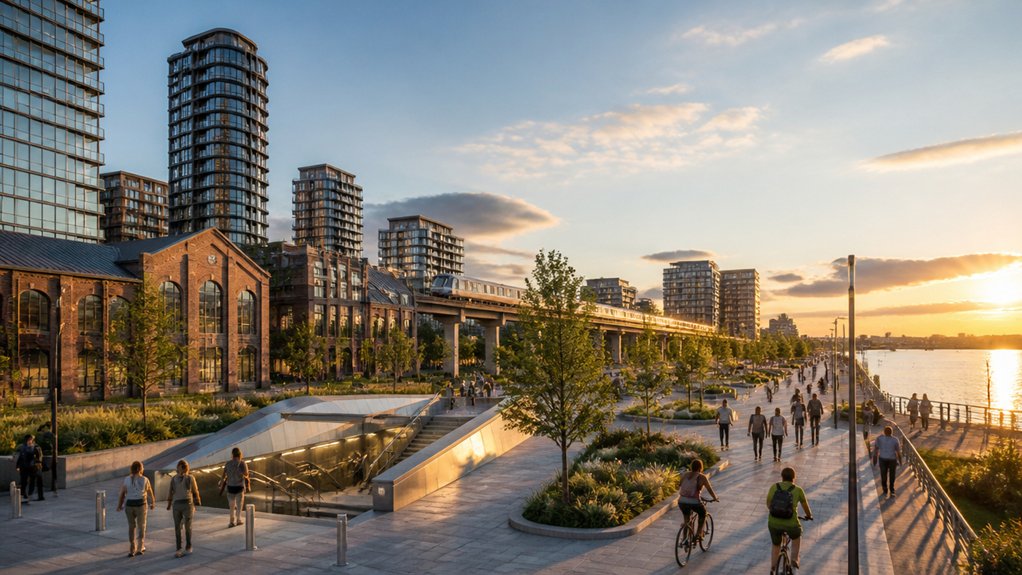
Could Woolwich be the right fit for you? If you value character, connectivity and a strong sense of place, it may be. You’ll find Georgian streets, Victorian industrial buildings and riverside views alongside modern apartments and the Elizabeth line.
Historical landmarks, including the Royal Arsenal’s preserved warehouses and Artillery Square, give daily life a distinctive setting, while ongoing regeneration continues to improve homes, public spaces and amenities.
Woolwich suits you if you enjoy an active, mixed community rather than a polished, uniform enclave. Community events, markets and cultural programmes create regular opportunities to meet neighbours.
You should, however, weigh construction activity, changing streetscapes and varying architectural quality against improved transport and investment. Explore each neighbourhood carefully, check conservation proposals and visit at different times before choosing your home.
Conclusion
Woolwich brings historic character and confident renewal together. You can live among Georgian and Victorian landmarks, discover riverside architecture, and benefit from Elizabeth line and DLR connections without losing the area’s distinctive identity. Regeneration is adding homes, cultural venues, and better public spaces while conservation protects its military and civic heritage. If you value character, connectivity, and long-term change, why look elsewhere? Woolwich offers a grounded London lifestyle with room to grow—provided you choose your neighbourhood carefully.