

Like a modern-day market town with a distinctly London pulse, Brixton blends cultural depth, strong community ties and property opportunities that reward careful judgement. You’ll find lively streets, excellent transport and homes ranging from period terraces to renovation projects and contemporary apartments. Yet each pocket feels different, and pricing can shift sharply by street, condition and future potential—so knowing where to look could make all the difference.
Key Takeaways
- Brixton offers a vibrant, diverse community shaped by markets, independent cafés, street food, galleries, murals, festivals, and live music.
- Popular areas include bustling Brixton Village, leafy Brixton Hill and Tulse Hill, café-lined Acre Lane, and family-friendly Herne Hill.
- Excellent Victoria line, rail, bus, cycling, and walking connections make Brixton convenient for commuters and support strong property demand.
- Housing ranges from compact flats and Victorian conversions to period terraces and luxury developments, with prices varying by location, condition, and amenities.
- Families benefit from Brockwell Park, libraries, and community facilities, while residents should consider noise, congestion, renovation costs, lease terms, and high prices.
What Is Brixton Like to Live In?
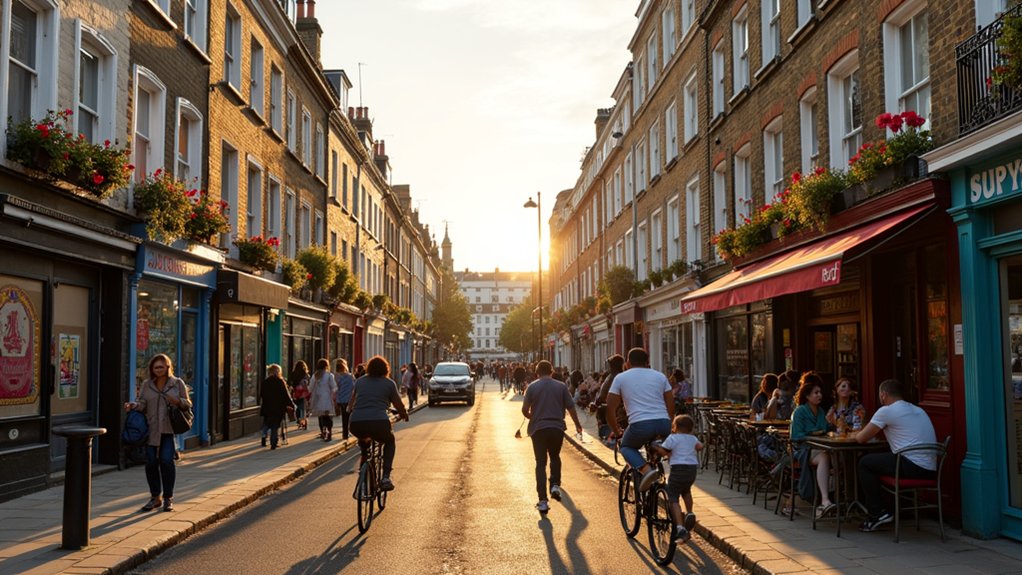
Living in Brixton puts you in one of South London’s most vibrant, well-connected neighbourhoods, where Victorian terraces sit alongside modern apartments, independent cafés, street-food spots and music venues. You’ll benefit from fast Victoria line journeys, excellent bus routes and a thriving high street that keeps everyday life convenient.
Brixton feels energetic, creative and proudly independent. You’ll find local art in galleries, murals and pop-up exhibitions, while community events bring residents together throughout the year. Market traders, food halls and specialist shops add character, supporting strong rental appeal and sustained buyer interest.
For homeowners, the housing stock offers genuine renovation potential. You can modernise period terraces, improve energy efficiency and add value through thoughtful layouts, loft conversions or rear extensions, subject to planning. Demand remains resilient, particularly for well-presented homes near transport and amenities.
Which Brixton Areas Suit Your Lifestyle?
Choosing the right part of Brixton depends on how you want to spend your time, your tolerance for city energy and the kind of property project you’re considering.
Around Brixton Village and Market Row, you’ll find lively dining, local art, and food festivals on your doorstep. Expect stronger rental demand, but also noise, footfall, and tighter flats.
For a calmer, greener feel, look towards Brixton Hill or Tulse Hill, where Victorian terraces offer more space, gardens, and scope for thoughtful renovation.
Acre Lane suits you if you want cafés, independent shops, and a mixed housing market.
Herne Hill’s village atmosphere appeals to buyers seeking polished period homes and family-friendly streets.
Before committing, compare conservation constraints, lease terms, and refurbishment costs.
Your best fit balances lifestyle with resale potential, not just the property’s initial asking price.
How Easy Is It to Travel Around Brixton?
You’ll find Brixton well connected by the Victoria line, National Rail, and convenient bus routes across London.
For everyday trips, you can cycle or walk easily, making transport access a strong selling point when renovating or evaluating a property.
Next, consider how each option shapes your commute, costs, and home’s market appeal.
Underground And Rail Links
Brixton’s Victoria line station puts central London within easy reach, with trains to Victoria in around five minutes and Oxford Circus in roughly 15.
Making the area especially practical for commuters and renovation-minded buyers weighing transport against property potential. This Underground connectivity can strengthen resale appeal, particularly when you’re upgrading a period flat or evaluating a development opportunity near the station.
Brixton’s rail station accessibility adds another advantage: services on the Southeastern network connect you with destinations including Denmark Hill, Peckham Rye and London Bridge, helping you reach offices, universities and cultural districts without crossing the entire city.
Check walking times, service frequency and late-evening options before committing.
For buyers, strong links can support rental demand, while planned refurbishments should prioritise sound insulation, secure cycle storage and efficient layouts.
Bus Routes And Connections
Beyond the Underground, Brixton’s extensive bus network makes cross-London travel practical, with routes linking you to Clapham, Camberwell, Streatham, Victoria and central neighbourhoods around the clock. You’ll find dependable services along Brixton Road, Acre Lane and Brixton Hill, helping you reach work, schools, hospitals and entertainment without changing trains.
Night buses add reassurance for late shifts, dinners and events, while frequent daytime departures support flexible routines.
For buyers, strong bus connectivity can widen your search beyond properties nearest the station. A refurbished terrace or conversion slightly farther out may offer better value, provided route efficiency suits your commute. Check TfL journey times, service frequency and disruption patterns before committing to a renovation budget.
You’ll also benefit from multiple interchange points, including connections towards Vauxhall, Peckham and Waterloo. This practical network strengthens Brixton’s rental appeal and long-term property resilience.
Cycling And Walking Options
With compact streets, local shops and key destinations close together, Brixton makes many daily journeys straightforward on foot or by bike. You’ll find useful walking routes linking Brixton Village, the Tube, Brockwell Park and neighbouring Herne Hill, although busy junctions require attention.
Cycling infrastructure continues to improve, with quieter routes, cycle lanes and secure parking helping you cross south London more confidently. Check local traffic schemes before buying, as road layouts can change and affect accessibility, noise and kerb appeal.
For renovation projects, a bike-friendly location can strengthen resale appeal, particularly among buyers seeking shorter commutes without relying on a car. Look for homes near well-lit routes, secure cycle storage and practical entrances.
These details support everyday convenience and can make a refurbished flat feel specifically more competitive in Brixton’s active property market.
Where to Eat and Go Out in Brixton?

Whether you’re after Caribbean classics, independent cafés, or late-night cocktails, Brixton makes eating and going out feel distinctly London. Start at Brixton Village, where you’ll find global menus, buzzy bars, and small businesses giving former arcades fresh purpose.
Market Row adds Jamaican favourites, natural wine, and relaxed dining, while Electric Avenue keeps your evening rooted in local history.
For Nightlife hotspots, choose Phonox for serious electronic sets, Hootananny for live music, or The Prince of Wales for rooftop views and dancing.
You’ll also find comedy, theatre, and galleries around Coldharbour Lane, creating year-round reasons to stay out.
During Cultural festivals, the neighbourhood becomes even livelier, with music, food, and street performances.
If you’re evaluating a renovation project, nearby dining demand can strengthen rental appeal and resale prospects.
Is Brixton Suitable for Families?
Is Brixton suitable for families? Yes, if you value lively London living alongside practical support. You’ll find family friendly amenities across the neighbourhood, including Brockwell Park’s play areas, swimming facilities and weekend activities.
Brixton’s libraries, community centres and independent shops also make everyday life feel connected rather than anonymous.
For education, you’ll have several school options nearby, spanning nurseries, primaries and secondaries, though you should check catchment boundaries and Ofsted reports before committing.
Transport links simplify school runs, with the Victoria line, Overground connections and frequent buses serving surrounding districts.
From a renovation perspective, look for period terraces and maisonettes with adaptable layouts, gardens or loft potential. Prioritise insulation, storage and secure outdoor space; these upgrades can improve family comfort and strengthen long-term appeal in a competitive south London market without compromising Brixton’s character.
How Much Does Property Cost in Brixton?
If you’re weighing a Brixton move, you’ll find average property prices and rents reflect strong demand across South London.
Compare period terraces, converted flats and renovation projects carefully, as refurbishment potential can reshape your budget and long-term return.
Recent market trends suggest buyers and renters should negotiate sharply while tracking transport-led growth and local supply.
Average Brixton Property Prices
How much does property cost in Brixton? You’ll find a broad spread, reflecting London’s varied housing stock.
Compact flats near Brixton Village and the Tube typically command strong prices, while larger Victorian conversions offer more space and renovation potential.
Period terraces around Herne Hill and quieter residential roads often sit at a premium, especially when they retain original features.
Luxury apartments in new developments can cost considerably more, with pricing driven by concierge services, balconies, energy efficiency and skyline views.
Meanwhile, a dated maisonette may look expensive initially but could reward you with value after a carefully budgeted kitchen, bathroom or layout upgrade.
Compare price per square metre, lease length, service charges and building condition before committing.
Proximity to transport, independent culture and Historic landmarks continues to support Brixton’s long-term appeal.
Rental Costs and Market Trends
Rental costs in Brixton vary sharply by property type, condition and location, with well-presented one-bedroom flats near the Tube and Brixton Village attracting a premium. You’ll typically pay more for converted period apartments, balconies and turnkey kitchens, while tired interiors can offer negotiating room if you’re willing to renovate.
Affordable options appear farther south, around Loughborough Junction or on less connected streets, though you should compare transport times and service charges.
Market fluctuations reflect London-wide interest rates, seasonal demand and shifting renter preferences. Track comparable listings, ask when the property last changed hands, and check whether planned works could increase your costs.
If you’re buying to let, budget for compliance upgrades, maintenance and void periods rather than relying on headline yields. Rental demand remains resilient, but pricing rewards realistic valuations and smart improvements.
Is Brixton Right for Renters, Buyers and Investors?
Brixton can work well for renters, buyers and investors, provided you match its fast-moving market with the right strategy.
As a renter, you’ll find the best value by comparing streets, transport links and renovation quality, rather than judging the postcode alone. Check insulation, heating, windows and service charges before signing, since attractive period conversions can hide ongoing costs.
If you’re buying, focus on layouts with practical London living space and scope for compliant upgrades. A sound survey and realistic refurbishment budget matter more than cosmetic styling.
For property investment, Brixton rewards careful research into tenant demand, licensing, lease terms and achievable yields. Rental affordability varies sharply between homes, so model voids, maintenance and mortgage changes before committing.
Work with local agents and contractors to price opportunities accurately and protect your margins.
What Are the Pros and Cons of Living in Brixton?

Although Brixton offers excellent transport, lively markets, independent businesses and strong tenant demand, daily life comes with trade-offs. You’ll benefit from Community diversity, excellent food, and frequent Cultural events, while Victoria and the Northern line connect you quickly across London. Local shops and cafés add character, and refurbishing a period flat can release value for homeowners and investors.
However, you should budget carefully. Property prices and rents remain high, competition is intense, and busy streets can bring noise, congestion, and occasional antisocial behaviour. Some homes need substantial renovation, from outdated kitchens to damp and inefficient windows, so survey costs matter.
You’ll also find stark differences between streets: compare transport access, service charges, lease terms, and planned works before committing. Brixton suits you best if you value energy, convenience, and long-term regeneration over quiet suburban living.
Frequently Asked Questions
What Healthcare Facilities and GP Services Are Available in Brixton?
You’ll find GP practices, pharmacies, dentists, opticians, and nearby hospitals serving Brixton. Healthcare accessibility is strong, while your GP registration process typically requires choosing a practice, completing forms, and providing proof of address.
How Safe Is Brixton, and Which Resources Provide Local Crime Information?
Brixton isn’t a crime-free fortress, but you’ll find active policing and improving Neighborhood safety. Check Metropolitan Police crime statistics, London Datastore maps, and local alerts before buying, renovating, or renting your London property.
What Schools and Nurseries Are Located Near Brixton?
You’ll find local educational institutions including Evelyn Grace Academy, Ark Evelyn Grace, Dunraven School, and St John’s Angell Town; nursery options include Little Diamonds and Brixton Nursery, supporting family-focused property renovations near transport.
How Can Newcomers Get Involved in Brixton’s Community Groups and Local Events?
You’ll find Brixton’s heartbeat by joining Community gardening sessions, local art programs, residents’ associations, and market events. Follow Lambeth listings, volunteer locally, and introduce yourself—your connections can enrich neighbourhood life and reveal renovation opportunities nearby.
What Council Services and Waste Collection Arrangements Apply in Brixton?
Check Lambeth Council’s website for bin days, recycling rules, bulky-waste bookings, council tax, and repairs. You’ll find local amenities nearby, while Community engagement helps you understand permits, collection changes, and renovation-related disposal requirements.
Conclusion
If you’re weighing up Brixton, remember: location is king. You’ll get culture, connectivity and a resilient London property market, whether you’re renting a characterful terrace or buying a renovation project with upside. Each pocket feels different, so explore streets, transport links and local amenities before committing. With smart improvements, period homes and tired flats can release value—but budgets matter. In Brixton, you’re investing in more than bricks and mortar: you’re buying into a community that keeps evolving.