
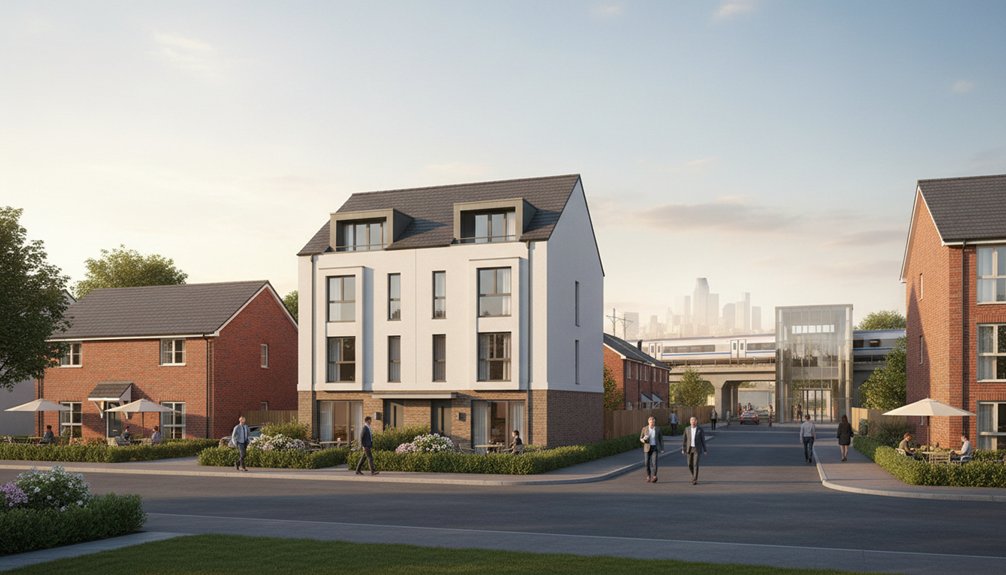
If you work in Central London, buying in Gillingham could give you more space and lower property prices than many London commuter towns, but you’ll trade that saving for a roughly 50–80-minute Southeastern journey. Your decision should weigh fares, peak-time reliability, station access and your required office days—not just the asking price. Local amenities and future development add appeal, yet delays and transport costs could change the numbers more than expected.
Key Takeaways
- Gillingham offers lower property prices than London, making it attractive for buyers seeking more space and relatively affordable homes.
- Direct trains reach London Victoria in roughly 50–60 minutes, but door-to-door commuting may approach 90 minutes.
- Peak services can be crowded, and delays, engineering works, parking, and rising rail fares may significantly affect commuting costs.
- Areas near Gillingham station, bus routes, and the A2 offer practical connectivity, though congestion and parking demand require investigation.
- Before purchasing, compare total costs, recent sold prices, schools, safety, flood risk, planning proposals, and property-specific legal details.
Is Buying in Gillingham Good for London Commuters?

Yes—Gillingham can be a practical choice for London commuters who want lower property prices than the capital without giving up rail access. You’ll typically find more space for your budget, including terraces, semidetached homes, and flats suited to different household plans.
However, compare total affordability rather than headline prices: mortgage rates, commuting costs, council tax, maintenance, and childcare can materially change monthly outgoings. Review recent sold prices, rental demand, and planned developments street by street, since performance varies across the town.
Strong local amenities, including schools, shops, healthcare, and nearby employment hubs, can support resale appeal and reduce daily travel. You’ll also benefit from a community atmosphere, though you should inspect noise, parking, flood exposure, and broadband before committing.
The decision makes sense when savings outweigh recurring transport and ownership costs.
What Are Gillingham-to-London Train Times?
You’ll typically reach London in around 45–60 minutes, depending on your destination and service.
Peak trains usually cost more and may be busier, while off-peak services can offer better value with more flexible travel times.
Compare current timetables and fares before judging whether Gillingham’s lower property prices offset your commuting costs.
Typical Journey Duration
So, how long does the Gillingham-to-London commute take? A typical direct train to London Victoria takes about 50–60 minutes, while services to London Charing Cross generally take roughly 70–80 minutes.
Your exact timing depends on the service, calling pattern, and final Central London destination. Add the walk or bus journey to Gillingham station, plus your onward Tube connection, and a realistic door-to-door trip may approach 90 minutes.
That’s longer than many commuter-belt locations, but substantially cheaper house prices can offset the time cost. You’ll also need to value flexible working: commuting three days weekly produces a different calculation from five.
Compare annual season-ticket costs, fares, and travel time against local amenities and Gillingham’s community vibe before deciding whether the discount fits your lifestyle.
Peak And Off-Peak Times
Peak services from Gillingham to London typically run on weekday mornings, with the busiest departures roughly between 06:00 and 09:00. Return demand usually peaks from about 16:00 to 19:00. If you commute to Central London, these periods bring fuller trains and less flexibility, so check Southeastern’s timetable before committing to a purchase.
Off-peak departures, generally later in the morning, mid-afternoon, evenings, and weekends, can offer quieter travel and potentially lower fares, depending on your ticket and route. Flexible or season-ticket options may improve value if you travel regularly, but calculate the annual cost against hybrid working.
Peak commuting can also affect your lifestyle: reliable connections may matter more than headline journey times. Gillingham’s local amenities and community vibe add value, especially if off-peak flexibility lets you enjoy them rather than simply sleep-and-commute.
What Does the Gillingham Commute Cost?
Your Gillingham commute cost starts with train fares, which can vary considerably by ticket type, timing, and destination.
You’ll also need to budget for monthly expenses such as parking, local travel, and occasional fare increases.
Comparing these costs with potential London earnings will show whether the commute supports your purchase decision.
Train Fare Costs
If you commute from Gillingham to London, rail fares can materially affect whether buying locally makes financial sense. Your exact cost depends on destination, ticket type, peak travel, and whether you use a season ticket or flexible options.
Gillingham sits in Zone 5–8 pricing territory on Southeastern routes, so travelling during weekday peaks can command a substantial premium. Check current fares for your specific London terminal, then compare daily, weekly, and annual products before making an offer on a property.
Contactless and split-ticketing may reduce some journeys, but availability and restrictions vary.
Don’t assume a cheaper home offsets every fare increase: calculate the value of time saved, likely office attendance, and resale demand.
Local cuisine and cultural attractions add lifestyle value, but they shouldn’t obscure your transport-cost sensitivity.
Monthly Commuter Expenses
Ticket prices only show part of the Gillingham commute’s monthly cost. If you travel into Central London five days weekly, multiply your season-ticket or flexible-fare price by twelve, then add station parking, local buses, occasional taxis, and peak-time meals.
A realistic budget should also allow for delays, replacement services, and hybrid-working changes; commuting fewer days can materially reduce your annual spend.
Compare that total with housing costs before deciding whether Gillingham offers value. Lower purchase prices may offset travel, but mortgage rates, maintenance, and council tax still matter.
You should also price the lifestyle benefits: local amenities can reduce discretionary driving and convenience spending, while school options may influence both your family budget and resale demand.
Track actual journeys for a month, test flexible tickets, and stress-test your budget against fare increases.
How Reliable Is the Gillingham Commute?
Gillingham’s commute is generally reliable, with Southeastern trains to London Victoria, London Bridge, and St Pancras typically taking around 40–55 minutes. Although peak-hour delays and engineering works can affect punctuality, you’ll find frequent weekday services, giving you practical flexibility for standard office hours.
However, check live updates before travelling, particularly during autumn leaf fall, severe weather, or planned weekend closures. The route’s performance is usually strongest outside the busiest periods, while peak trains can feel crowded and provide less tolerance for disruption.
If you need consistent arrival times, allow a 15–20-minute buffer or consider travelling slightly earlier. Compare annual season-ticket savings with your current monthly commuter expenses, then assess whether the journey’s reliability suits your schedule, local amenities, and desired community atmosphere.
Southeastern’s mobile alerts can help you react quickly when timetables change.
How Do Gillingham Property Prices Compare?
Once you’ve judged whether the commute fits your routine, compare Gillingham’s purchase prices with nearby Medway towns and your current budget. Recent Land Registry and portal data generally place Gillingham below national averages, while prices can differ notably between property types. This when the knowledge of Jacksons Estate Agents Gillingham really comes to the fore. Local agencies understand the market that they operate in every day of the week and are quick to notice changes in the area.
Flats usually offer the lowest entry point, whereas family houses command more, particularly when they include gardens, parking, or additional bedrooms. Compare sold prices, not just asking prices, and calculate your mortgage, stamp duty, maintenance, insurance, and commuting costs together.
Rochester and Chatham may show different price premiums, so assess value rather than assuming cheaper means better. For Property investment, rental yields, tenant demand, and potential void periods matter as much as capital growth.
Track Market trends over several months, because isolated listings can distort your estimate and negotiation strategy.
Which Gillingham Areas Suit Commuters Best?

If your commute shapes the purchase decision, prioritise areas with reliable access to Gillingham station, main bus routes, and the A2 rather than judging homes by postcode alone.
Around the station, you’ll find the strongest rail convenience, although prices and parking demand can reflect it. Rainham, just west of Gillingham, may suit you if you value a broader choice of trains and can accept a longer walk or short connection.
Homes near the A2 can work well for drivers, but check peak-time congestion before committing.
In Upper Gillingham and Rainham, compare walking distances, season-ticket costs, and resale demand rather than relying on listings’ journey estimates.
Also assess Local schools and neighborhood safety street by street, since these factors can influence liquidity when you eventually sell or let the property.
What Is Everyday Life Like in Gillingham?
Everyday life in Gillingham offers practical access to shops, schools, healthcare, parks, and transport, but the experience varies considerably by neighbourhood. You’ll find everyday retail around the town centre, while larger purchases may require trips to Hempstead Valley or nearby Medway towns.
Local dining ranges from independent cafés and takeaways to familiar chains, with choice generally strongest near busy commercial areas.
Green spaces, including Riverside Country Park, give you room for walking, exercise, and family time.
Community events, markets, and local clubs can make it easier to build connections, although activity levels differ across districts.
Healthcare provision is convenient, with pharmacies, dentists, and Medway Maritime Hospital nearby.
For commuters, reliable buses, rail access, and practical amenities can support a manageable routine, but peak-time congestion still affects daily schedules.
Which Checks Matter Before Buying in Gillingham?
Before committing to a Gillingham property, you’ll need to verify more than its asking price and presentation. Compare recent sold prices by street, not just current listings, and calculate your full monthly cost: mortgage, service charges, insurance, council tax, maintenance, and commuting.
Check the EPC, roof, damp, electrics, plumbing, and any subsidence indicators; commission a survey suited to the building’s age. Review flood-risk maps, planning applications, local development proposals, and nearby transport works, since these can affect value and noise.
Test your journey to Central London at peak times, including station access and delays. Visit at different hours to assess traffic, parking, safety, local amenities, and the community vibe.
Finally, scrutinise lease length, restrictions, boundaries, and conveyancing searches before exchanging contracts or relying on optimistic forecasts.
Who Should Buy Property in Gillingham?

Once those checks support the numbers, the right buyer depends on Gillingham’s mix of affordability, commuter access, and neighbourhood variation. You’re a strong fit if you work in Central London but accept a longer rail journey in exchange for lower purchase prices and more space.
Calculate your full door-to-door commute, including station access, season-ticket costs, and occasional delays; headline journey times can mislead.
First-time buyers may find Gillingham’s entry prices more achievable than London’s, while families can benefit from larger homes and practical Local amenities. You’ll need to compare schools, parking, flood risk, and street-level condition rather than rely on postcode averages.
Investors should assess achievable rents, tenant demand, maintenance, and licensing rules. If you value a community atmosphere and can tolerate varied neighbourhood quality, Gillingham may offer balanced long-term value.
Frequently Asked Questions
What Schools and Childcare Options Are Available in Gillingham?
Gillingham offers primary and secondary schools, including grammar options, plus nurseries, childminders, and wraparound clubs. Compare Ofsted ratings, admissions data, fees, locations, and waiting lists carefully; School quality and childcare availability vary considerably by neighbourhood.
Are There Good Healthcare Facilities and GP Practices Nearby?
Yes, you’ll find solid healthcare accessibility nearby, despite concerns about NHS delays. Medway Maritime Hospital offers extensive services, while local GP practices provide reasonable GP clinic quality; compare ratings, registration availability, and appointment timelines before moving.
What Council Tax Bands Apply to Gillingham Properties?
Gillingham properties fall into Council Tax Bands A–H, with your exact bill depending on valuation and Medway Council’s annual rates. Check the postcode before comparing property prices and commuting options; budgets should include this recurring cost.
Are Flood Risks or Environmental Concerns Affecting Parts of Gillingham?
Yes, parts of Gillingham face flood risks, particularly near waterways and low-lying areas. You’ll need a Flood risk assessment and Environmental impact considerations, checking Environment Agency maps, insurance costs, drainage, and planning constraints before purchasing.
How Active Is Gillingham’s Local Community and Cultural Scene?
You’ll find an active, practical community, with regular community events, sports, markets, and festivals. Cultural venues provide theatre, music, galleries, and workshops, though programming remains smaller than nearby Rochester, so compare calendars before buying.
Conclusion
If you work in Central London, Gillingham can be a smart purchase when affordability matters more than a short commute. Southeastern services, local amenities, and family-friendly areas support long-term value, but you’ll need to budget realistically for fares, delays, and peak-time congestion. Compare total monthly costs with alternatives, inspect station access, and check planned developments before committing. Treat the commute like a long-term investment: manageable today, but worth stress-testing against future price, timetable, and lifestyle changes.