

When you ask a London estate agent to value your property, you’re asking them to read its history as carefully as its market potential. They’ll assess architectural details, conservation status, alterations, condition, and local character, then weigh these against comparable sales, transport, schools, amenities, and borough-specific demand. A Georgian terrace in Westminster won’t be judged like a family house in outer London—and the evidence behind that distinction can change your expectations.
Key Takeaways
- Estate agents combine local knowledge with the property’s condition, architecture, history, setting, size, layout, and presentation.
- They analyse verified nearby sales, adjusting comparisons for tenure, extensions, renovations, heritage features, permissions, and maintenance.
- Borough-specific trends, including transport investment, planning changes, demographics, seasonal demand, and Land Registry data, inform valuations.
- Valuations reflect local buyer priorities, such as schools, gardens, parking, amenities, journey times, conservation, and neighbourhood character.
- Comparing agents requires examining their methodology, comparable-sale evidence, local expertise, and understanding of heritage and property-specific improvements.
How London Estate Agents Value a Property

London estate agents value a property by combining local knowledge with a careful assessment of its condition, history, and setting. You’ll see them examine architectural character, period features, alterations, floor plans, and maintenance requirements.
They’ll consider whether original joinery, fireplaces, plasterwork, or a listed status adds significance, while noting conservation restrictions that may affect future work.
Location matters beyond a postcode: your home’s street, outlook, transport links, amenities, and relationship with nearby heritage assets all shape its appeal.
Agents also assess size, light, layout, outside space, and presentation, then adjust their judgement for current Market fluctuations.
Clear reasoning supports valuation accuracy, helping you understand how each feature influences the figure.
A careful valuation shouldn’t erase a building’s history; it should recognise its character while reflecting realistic buyer expectations in your borough.
Which Evidence Supports a London Valuation?
You’ll support your London valuation with recent comparable sales, carefully selected from nearby properties of similar age, scale, and character.
Local market trends add essential context, while heritage protections and conservation considerations may influence demand and value.
You’ll also account for property-specific features, from original detailing and extensions to condition, layout, and sensitive alterations.
Recent Comparable Sales
Recent comparable sales provide the clearest evidence for a London property valuation, particularly when the properties share the same neighbourhood, period, architectural character, condition, and tenure. You’ll want your agent to examine completed transactions, not asking prices, and adjust for floor area, extensions, garden quality, parking, lease length, and service charges.
A carefully matched Victorian terrace in a conservation area can command a different figure from a superficially similar modernised house nearby. Your valuer should verify sale dates, photographic records, planning history, and alterations affecting historic fabric.
Historical market data adds context, while Demographic influences may explain buyer preferences without replacing direct evidence. Ask whether each comparison reflects the property’s listed features, craftsmanship, orientation, and repair needs.
This disciplined approach keeps the valuation grounded in authentic, borough-specific evidence.
Local Market Trends
Local market trends help your valuer place comparable sales within the right time frame, especially when prices have shifted between a transaction and the inspection date. You’ll see evidence in Land Registry updates, borough-level price indices, local agent reports, and records of agreed transactions.
These sources reveal Market fluctuations across districts, from established garden suburbs to conservation areas near historic squares. Your valuer may also review planning decisions, development pipelines, transport investment, and changes to zoning regulations, since these can influence buyer demand and future supply.
Seasonal patterns matter, too, particularly where sales volumes remain modest. By comparing several independent indicators, your valuer can distinguish a lasting neighbourhood movement from a short-lived spike, producing a fairer valuation that respects London’s layered architectural and civic heritage.
Property-Specific Features
Market evidence sets the context, but your property’s individual features determine how closely those comparisons apply. Your agent will inspect period details, floorplans, condition, and alterations, then compare them with verified sales of genuinely similar homes.
Original cornices, fireplaces, joinery, stained glass, and retained proportions can strengthen appeal, particularly in conservation areas where sympathetic work carries weight. Conversely, removed features, poor extensions, damp, or unauthorised changes may reduce value or require adjustment.
You should provide records for listed-building consent, planning approvals, renovation invoices, and guarantees, because documented stewardship supports the valuation.
Your home’s architectural styles, whether Victorian, Georgian, Edwardian, or modernist, also shape buyer expectations across London boroughs. Luxury interiors may attract a premium when craftsmanship feels cohesive, though highly personal finishes won’t always recover their full cost.
Agents balance character, usability, and evidence carefully.
How Central London Boroughs Affect Valuations
You’ll see prime location premiums shaped by each borough’s heritage, architecture, and address prestige.
Conservation-area controls can protect character while influencing alterations, maintenance costs, and buyer demand.
You’ll also need to weigh transport links and amenities, since convenience remains central to a carefully supported valuation.
Prime Location Premiums
Because London’s central boroughs combine historic architecture, limited space and enduring prestige, their location premiums can materially raise a property’s valuation. As you assess a home, consider how its address places you near celebrated streets, galleries, theatres, parks and transport links.
Luxury amenities, from concierge services to fine dining, can strengthen buyer demand, while proximity to established institutions supports long-term appeal. Historical significance also matters: a carefully retained façade, period proportions or a connection to a notable neighbourhood may distinguish the property from newer stock.
You’ll need to weigh these advantages against size, condition, outlook and accessibility rather than applying a blanket central-London uplift. Estate agents compare recent, genuinely comparable sales, adjusting for floor level, refurbishment quality and privacy. This approach captures prestige accurately without overstating a premium based solely on postcode.
Conservation Area Influence
A conservation-area designation can influence a central London valuation by protecting historic character while placing tighter controls on alteration, redevelopment and demolition. When you assess a property, you’ll need to examine its façade, roofline, windows, materials and relationship with neighbouring buildings. These details may carry architectural significance, particularly where a terrace, mansion block or garden forms part of a coherent historic townscape.
Heritage preservation can support value by limiting incompatible development and maintaining visual character, but restrictions may also increase costs, extend approval times and reduce your options for extensions or replacements. Your valuer should review the conservation-area appraisal, Article 4 directions, listed-building status and previous planning decisions.
Well-executed, consented improvements can strengthen appeal; unauthorised alterations, however, may create liabilities and weaken the valuation.
Transport And Amenities
How easily can you reach the Underground, rail services, buses and local amenities from the property? In central London, that answer can substantially shape your valuation. You’ll usually command stronger interest when stations, frequent routes, independent shops, schools and green spaces sit within a convenient walk.
Yet you must assess more than journey times. A home beside Historical architecture or Cultural landmarks may benefit from enduring prestige, distinctive streetscapes and visitor appeal, while traffic, noise and crowds can temper demand.
Your valuation should consider listed terraces, protected views and conservation requirements, since these features preserve character but may limit alterations.
Compare transport accessibility with local amenity quality, service reliability and pedestrian experience. You’ll then present a balanced figure that reflects both everyday convenience and the borough’s carefully protected heritage.
Why Outer London Boroughs Value Family Space

Outer London boroughs often place a premium on family space because buyers value larger rooms, gardens, off-street parking and practical layouts alongside good schools and transport links.
When you view a property, look beyond floor area: adaptable rooms, original staircases, mature planting and well-preserved façades can reveal lasting value.
Victorian villas, Edwardian semis and historic cottages often offer historical significance that strengthens their appeal, particularly when conservation work respects local character.
You’ll also notice how extensions, loft conversions and garden studios improve everyday living without overwhelming the building’s proportions.
Luxury interiors may attract attention, but an estate agent will assess workmanship, natural light, storage and the quality of any alterations.
How Transport Links Change Property Values
Transport links can reshape a property’s value by connecting historic neighbourhoods with London’s wider economic and cultural life. When you assess a home, consider journey times, service frequency, and planned improvements, not merely the station’s distance.
A well-connected address may command a premium because you can reach employment districts, theatres, and galleries quickly. However, conservation matters: a new station or altered route can affect views, traffic, noise, and the character of a protected street.
Estate agents thus compare recent sales around each transport corridor, distinguishing quiet, heritage-led roads from busy thoroughfares. Luxury apartments near major interchanges often attract strong demand, while homes beside historic architecture may benefit from a more carefully balanced setting.
You should also check development proposals, as future access can lift values—or undermine the qualities that make a neighbourhood distinctive.
When Schools and Amenities Raise Valuations
When valuing a London home, estate agents examine the quality and character of nearby schools and amenities alongside the property itself. You’ll see them assess Ofsted results, catchment boundaries, historic school reputations, and demand for places, since School quality can strongly influence family buyers and long-term confidence.
They’ll also record the amenity impact of parks, libraries, markets, medical services, and independent shops, considering accessibility, upkeep, and local character rather than simply counting facilities. A conserved village green, a well-run community hall, or a long-established high street can strengthen desirability while reflecting a borough’s heritage.
Agents compare these features with recent local sales, noting whether they’re genuinely walkable and likely to remain protected. Planning policies, conservation designations, and investment proposals help you understand whether this premium appears durable or temporary.
How Condition and Improvements Affect Value
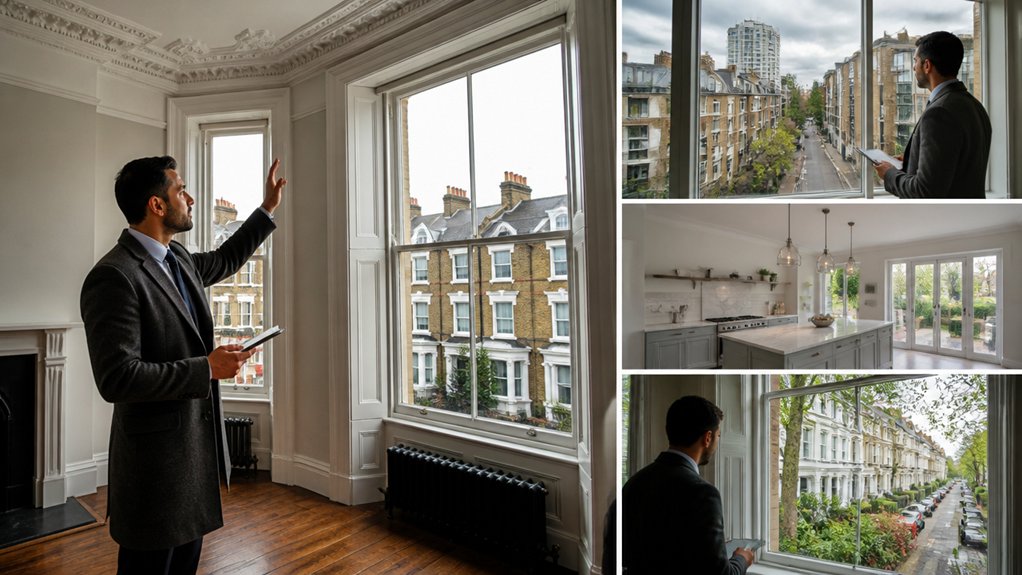
A London estate agent will inspect a property’s condition in detail, from original joinery, fireplaces, and plasterwork to the roof, services, windows, and insulation. You’ll see how sound maintenance protects value, while damp, movement, outdated wiring, or poor alterations can reduce it.
The assessment considers Property design, too: a well-proportioned Victorian terrace, listed detail, or thoughtfully planned conversion may attract a premium when its character remains intact. Improvements can add value when they enhance usability without erasing heritage.
You’ll need to distinguish sensitive repairs from inappropriate replacements, particularly in conservation areas. Evidence of competent workmanship, permissions, and compliance with Building regulations strengthens the valuation.
Energy upgrades, renewed services, and insulation matter, but an agent will judge their quality, longevity, and effect on the building’s original fabric.
How to Compare Valuations From Different Agents
Although valuations may differ, you should compare the evidence behind each figure rather than choosing the highest estimate. Ask every agent which recent, genuinely comparable sales support the assessment, noting differences in street, tenure, floor area, condition, and architectural significance.
A Georgian townhouse with original cornices, listed details, or conservation-area constraints may command a different value from a renovated modern equivalent, even nearby. Check whether each agent has allowed for necessary repairs, consent requirements, energy improvements, and the character that buyers may seek.
Market fluctuation can also explain changing estimates, particularly when sales evidence is limited. For valuation accuracy, request a written breakdown of assumptions, suggested marketing price, and likely selling range.
You should then compare methodology, local knowledge, and evidence—not simply the headline figure—before choosing an agent.
Conclusion
When you compare London valuations, look beyond the headline figure. Ask how each agent has weighed your property’s age, craftsmanship, conservation status, transport access, schools, condition, and comparable sales. Imagine a Georgian terrace in Richmond: original sash windows and a protected façade may command a premium, while dated wiring tempers it. By questioning the evidence and requesting borough-specific reasoning, you’ll reach a valuation that respects both the home’s heritage and today’s market.