
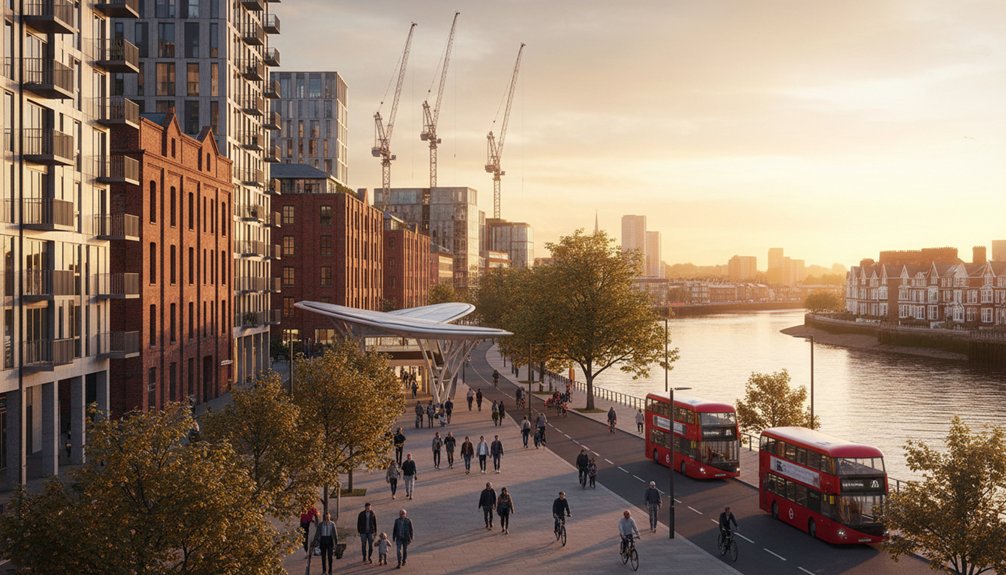
Living in Woolwich gives you a strong mix of affordability, connectivity and regeneration potential. You’ll find Elizabeth line access, river services, improving public spaces and housing ranging from Victorian terraces to new-build apartments. For buyers and investors, the key question is how transport upgrades, major developments and local amenities may influence demand, rents and long-term values. Explore which neighbourhoods, property types and lifestyle features best match your goals before the next phase of change reshapes the market.
Key Takeaways
- Woolwich offers diverse housing, from historic terraces to modern riverside apartments, generally providing better value than many inner-London districts.
- The Elizabeth line connects Woolwich quickly with Canary Wharf, Liverpool Street, and Tottenham Court Road, while river services add further convenience.
- Regeneration is improving public spaces, waterfront access, cultural facilities, commercial activity, and connections between the town centre and transport hubs.
- Royal Arsenal Riverside and nearby Thamesmead and Abbey Wood developments are expanding housing supply, amenities, and regional competition.
- Residents benefit from markets, parks, schools, healthcare, cafés, and community events, supporting a practical and increasingly vibrant lifestyle.
What Is It Like Living in Woolwich?
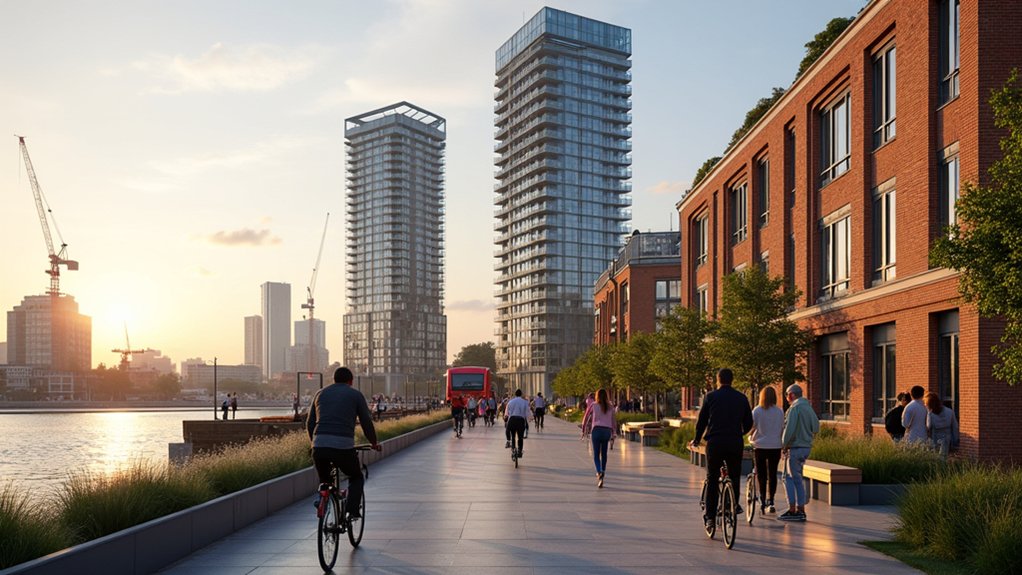
What’s it like living in Woolwich? You’ll find a riverside district combining practical amenities, cultural variety, and comparatively accessible housing.
Woolwich offers supermarkets, independent shops, cafés, pubs, gyms, schools, and healthcare within a walkable town-centre network. Its community events, from markets to seasonal celebrations, create regular opportunities to meet neighbours and support local businesses.
You can also explore local history through the Royal Arsenal’s preserved architecture, Woolwich Market, and nearby military landmarks, giving the area a distinctive identity that supports long-term appeal.
For investors, the resident mix—young professionals, families, and renters—helps sustain diversified demand.
Housing values and rents remain sensitive to property type, condition, and exact location, so you should compare comparable sales, rental yields, service charges, and vacancy risks before committing.
Daily convenience remains Woolwich’s strongest lifestyle proposition.
How Is Regeneration Changing Woolwich?
Woolwich’s regeneration is reshaping the amenities, housing stock, and investment profile that underpin its everyday appeal. You’ll see public-realm upgrades, improved riverside access, and stronger links between the Elizabeth line, town centre, and waterfront. These changes can support footfall, rental demand, and long-term capital growth, although pricing still varies sharply by street, tenure, and proximity to transport.
Investment is also broadening Woolwich’s offer beyond commuting. Restored historical landmarks, new cultural venues, independent businesses, and cultural festivals are strengthening the area’s identity and visitor economy. For you, that means more amenities and potentially greater resilience during market cycles.
Track planning approvals, infrastructure delivery, vacancy rates, and completed commercial space rather than relying on headline announcements. Regeneration creates opportunity, but execution matters: compare service charges, local transaction evidence, and rental yields before committing, and assess how quickly each project reaches operational maturity.
Which New Housing Developments Matter Most?
You’ll want to track Woolwich’s major regeneration schemes, as they’re reshaping housing supply and long-term value.
Assess each development by its new-home pipeline, transport links, and resident amenities.
These indicators can help you identify projects with the strongest investment potential.
Major Regeneration Schemes
If you’re evaluating Woolwich’s property prospects, major regeneration schemes matter because they’re reshaping housing supply, transport access and long-term demand. The Royal Arsenal Riverside remains the headline project, combining substantial residential delivery with investment around the Elizabeth line and riverfront. For you, its scale can support liquidity, but high pipeline volumes may limit short-term rental growth.
The wider town-centre programme also matters: upgraded public spaces, commercial investment and improved links can strengthen values beyond individual developments. Meanwhile, plans around Thamesmead and Abbey Wood could expand Woolwich’s effective catchment, increasing competition while supporting regional demand.
Assess each scheme’s phasing, tenure mix and delivery record rather than relying on glossy forecasts. Community engagement can reduce planning risk, while Historical preservation may constrain layouts but protect local character and underpin differentiated pricing.
Monitor completions, infrastructure milestones and achieved rents before investing.
New Homes And Amenities
When evaluating new homes in Woolwich, prioritise developments that pair reliable transport with genuinely usable amenities, not simply high unit counts. Assess walking times to Elizabeth line and DLR stations, then compare service charges, tenure mix, energy efficiency and delivery phases.
Schemes around the Royal Arsenal benefit from strong placemaking, riverside space, restaurants and cultural venues, supporting rental demand and resale appeal. However, you should test whether amenities operate year-round and whether further construction could affect views, access or noise.
Look for landscaped public environment, flexible workspaces, nurseries, gyms and independent retail rather than marketing promises. Community events can strengthen resident retention, while buildings that respect Local history often create distinctive, durable demand.
Review comparable rents, achieved sales, vacancy, developer reputation and completion risk before committing. A well-connected, amenity-rich scheme should outperform a cheaper isolated block over the long term.
How Easy Is It to Travel From Woolwich?
You’ll find Woolwich’s Elizabeth line connections put central London and key employment hubs within easier reach, strengthening its appeal to renters and buyers.
River services and road links add practical alternatives for commuting, airport access and cross-London travel.
Together, these transport assets can support stronger demand, rental resilience and long-term investment potential.
Elizabeth Line Connections
With Woolwich’s Elizabeth line station connecting directly to Canary Wharf in about 8 minutes, Liverpool Street in roughly 14 minutes, and Tottenham Court Road in around 19 minutes, you can reach London’s key employment and cultural districts far faster than many south-east London alternatives.
That time saving strengthens Woolwich’s appeal to commuters, renters and investors, supporting rental demand and potentially improving resale liquidity.
Step-free access, high-frequency services and modern trains also make everyday journeys more predictable, helping you spend less time planning connections.
You’ll have efficient access to offices, universities, historical landmarks and local cultural events across central London.
For buyers evaluating long-term value, Elizabeth line connectivity remains a measurable advantage, although you should compare service patterns, journey costs and peak-time reliability before committing.
It’s a transport upgrade with tangible market relevance.
River and Road Links
Elizabeth line speed is only part of Woolwich’s connectivity story: the Thames Clippers river bus links Woolwich Arsenal to central London and Canary Wharf, while the Woolwich Ferry provides a free crossing to North Woolwich for drivers, cyclists and pedestrians.
For you, this creates practical River transportation options beyond rail, with Waterfront views adding lifestyle appeal for residents and visitors. The ferry’s vehicle capacity and operating timetable can affect journey planning, so check live service updates before travelling.
Road access connects you with the A206, Blackwall Tunnel approaches and wider southeast London, although peak-time congestion remains a cost to factor into commuting.
For investors, multimodal access can support rental demand, resale liquidity and long-term regeneration value. You’ll also benefit from nearby walking and cycling routes, helping reduce reliance on cars for local trips.
What Homes Can You Find in Woolwich?
Woolwich offers a diverse housing market, from Victorian and Georgian terraces to modern flats, townhouses, and riverside apartments, giving buyers and investors options across multiple price points. You’ll find period homes with original detailing, compact leasehold flats, and new-build developments offering amenities, energy efficiency, and potential rental appeal.
Architectural styles vary considerably, helping you match a purchase to your budget, maintenance tolerance, and investment strategy. Historic landmarks and conservation-sensitive streets can support long-term character value, while regeneration schemes continue adding contemporary stock.
Compare service charges, lease lengths, ground rents, and projected completion dates before committing. Rental yields can differ sharply between older terraces and professionally managed apartments, so assess achievable rents rather than headline asking prices.
Check transport proximity, local demand, and comparable sales to gauge liquidity and future resale prospects.
Which Parts of Woolwich Suit Different Lifestyles?

Where should you live in Woolwich? Choose the area that matches your routine, budget and investment horizon.
If you prioritise fast Elizabeth line access, central Woolwich offers stronger rental demand from commuters and professionals, although entry prices can reflect that convenience.
You’ll find more space and potentially better value towards Woolwich Common and Shooters Hill, where quieter streets, green surroundings and larger homes suit families.
Royal Arsenal Riverside appeals if you want modern apartments, riverside regeneration and a tenant profile drawn to new infrastructure; compare service charges and supply carefully before buying.
For community engagement, assess residents’ groups, schools and local transport links, not just marketing claims.
Local cultural events can strengthen neighbourhood identity, supporting longer-term tenant retention.
Track completed schemes, planned delivery and achieved rents before committing.
Where Can You Shop, Eat and Relax?
If lifestyle convenience matters to you, Woolwich offers a practical mix of high-street shopping, independent cafés, riverside dining and green spaces, with the strongest concentration around Woolwich town centre and Royal Arsenal Riverside.
You’ll find supermarkets, pharmacies and everyday services close to transport links, supporting rental appeal for busy professionals and families.
Local markets add variety, while Woolwich Market provides fresh produce, street food and useful weekly shopping.
Along the river, cafés, restaurants and cultural venues create culinary hotspots that strengthen the area’s leisure offer and encourage footfall beyond office hours.
You can also relax at General Gordon Square, Maribor Park and the Thames Path.
For investors, this amenity mix matters: convenient retail, dining and recreation can improve tenant satisfaction, reduce vacancy risk and support long-term neighbourhood resilience.
How Much Does It Cost to Live in Woolwich?
Although costs vary by property type and exact location, Woolwich generally offers better value than many inner-London districts, with rents and purchase prices reflecting its strong transport links and ongoing regeneration.
You’ll typically find one-bedroom rents around £1,500–£1,800 monthly, while two-bedroom homes often range from £1,900–£2,400.
Buying prices commonly sit near £450,000–£550,000, although new-build riverside apartments can command premiums.
Factor in service charges, council tax, utilities and commuting costs when comparing developments.
Crossrail access may support rental demand and long-term capital growth, but you should assess lease terms, local supply and completion pipelines before investing.
Everyday spending remains relatively competitive, helping support Affordable living.
Community amenities, including supermarkets, markets and leisure facilities, add practical value while strengthening the area’s rental appeal for landlords and owner-occupiers alike.
Who Is Woolwich Best Suited To?

Woolwich is best suited to commuters, first-time buyers, young professionals and investors seeking comparatively accessible London property with strong transport connectivity. Elizabeth line services can put you in central London quickly, while DLR and National Rail connections broaden your employment reach.
If you’re buying your first home, Woolwich often offers more space than inner-London alternatives, although service-charge levels and new-build premiums require careful comparison.
Young professionals benefit from riverside amenities, improving retail provision and a growing rental market.
Investors should assess micro-locations, lease terms, planned supply and realistic rental yields rather than relying solely on regeneration forecasts.
Community diversity adds depth to everyday life, while Local history, from the Royal Arsenal to the riverside, supports the area’s identity.
You’ll suit Woolwich best if you value connectivity, growth potential and changing neighbourhood character.
Frequently Asked Questions
Can I Access Healthcare and GP Services Easily in Woolwich?
Yes, you’ll find healthcare access broadly convenient, with GP availability varying by practice and postcode. Check NHS registration options, patient reviews, and appointment capacity before moving, as proximity and service quality can influence property investment appeal.
What Schools and Nurseries Are Available for Families in Woolwich?
You’ll find primary and secondary schools, plus state and independent nurseries across Woolwich. Compare Ofsted ratings, admissions data, and transport links: strong School quality and varied Nursery options can support family appeal and long-term property investment.
How Safe Is Woolwich, and What Are the Local Crime Levels?
You’ll find Woolwich’s safety mixed by street, with reported crime concentrated around busy retail and transport areas. Check Metropolitan Police data, prioritise well-lit developments, and assess Community safety and Crime prevention measures before investing or moving.
Are Pets and Bicycles Accommodated in Woolwich Housing Developments?
You won’t need to sacrifice your lifestyle: many Woolwich developments offer pet friendly policies and secure Bicycle storage facilities. Check building rules, deposits, and capacity, because these amenities strengthen rental appeal, tenant satisfaction, and long-term investment returns.
What Community Events and Activities Take Place in Woolwich?
You’ll find Community festivals, outdoor markets, cultural workshops, live music, sports sessions, and family activities across Woolwich. These events strengthen local engagement, increase footfall, and support investment appeal by enhancing neighbourhood vibrancy and visitor demand.
Conclusion
Living in Woolwich gives you a compelling foothold in southeast London: regeneration is improving streets, housing is diversifying, and Elizabeth line connections strengthen commuter appeal. You can choose period character, riverside amenities, or modern developments while benefiting from relatively accessible pricing. Yet compare service charges, rental demand, transport proximity, and developer quality carefully. Think of Woolwich as a rising tide: informed buyers can position themselves early, capturing lifestyle benefits and potential long-term growth as investment continues.