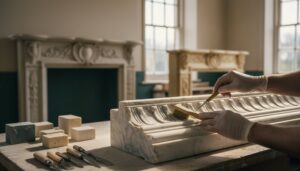
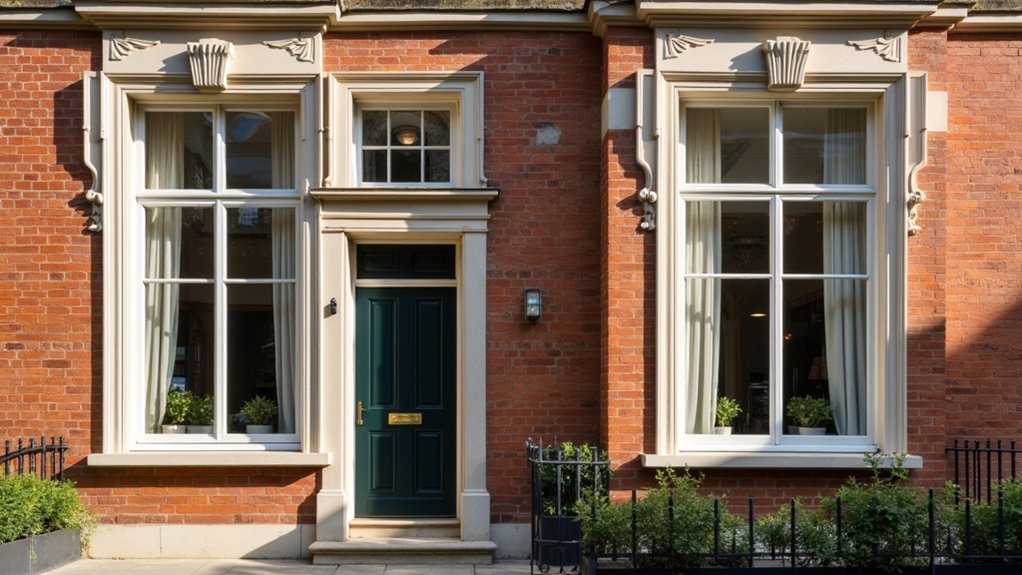
In a conservation-area townhouse in Islington, restoring the original sash windows and ornate cornicing helped preserve its period identity while improving draught performance and buyer appeal. If you’re deciding between restoration and replacement, the choice affects more than appearance: planning controls, fabric condition, energy efficiency, maintenance costs, and resale value all matter. Before you remove an original feature, you’ll need to establish whether skilled repair can deliver better long-term value than a compliant modern substitute.
Key Takeaways
- Restoring structurally sound original sash windows preserves London property’s historic authenticity, architectural character, and buyer appeal.
- Original sash windows retain slender sightlines, balanced elevations, controllable ventilation, and craftsmanship that replacement replicas may not replicate convincingly.
- Cornicing restoration preserves period character by matching historic profiles, scale, materials, and decorative relationships with surrounding features.
- Replacement is appropriate when rot, distortion, or alterations prevent reliable repairs, but like-for-like materials and profiles protect heritage value.
- Professional restoration, appropriate upgrades, documented quality assurance, and conservation approvals can improve performance while safeguarding long-term property value.
Restoration or Replacement: Which Suits Your London Property?
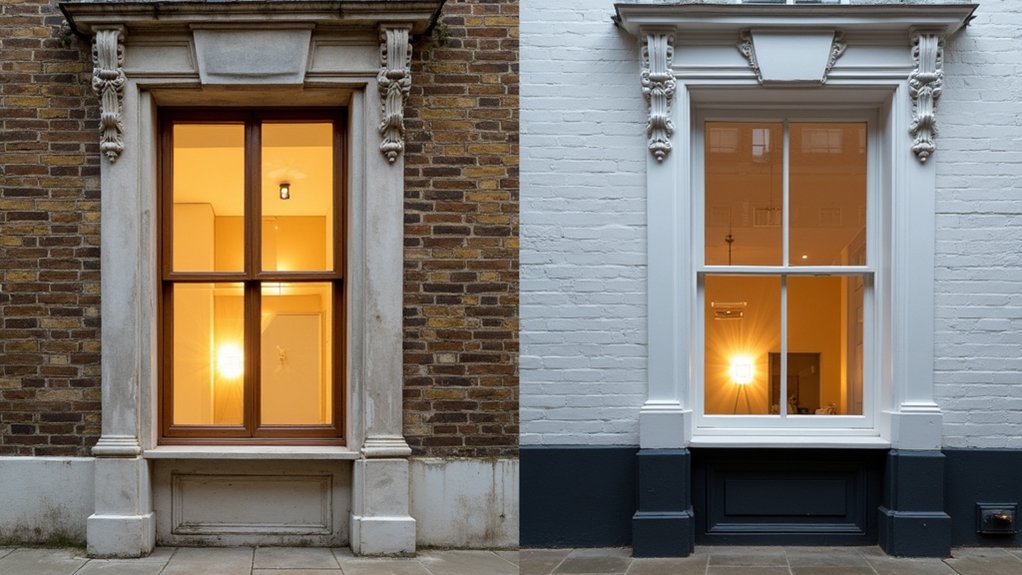
Choosing between sash-window restoration and replacement depends on your property’s condition, heritage status, and performance requirements.
If frames remain structurally sound, restoration usually offers the least disruptive solution. A specialist can splice decayed timber, renew cords, repair pulleys, draught-proof joints, and install discreet secondary glazing. You’ll retain original proportions while improving operation and thermal comfort.
Replacement becomes practical when extensive rot, distortion, or previous alterations prevent reliable repair. Specify accurately matched timber sections, glazing bars, and compliant safety glass, particularly in conservation areas where planning controls may apply.
Compare quotations by including scaffolding, decoration, disposal, permissions, and future maintenance, not just the window price. This Cost comparison prevents misleading savings.
Modern upgrades, including slim double glazing or balanced spring systems, can improve performance, but confirm that they suit the existing architecture.
Why Original Sash Windows Add London Value
Why do original sash windows add value to a London property? They provide Historical authenticity, linking your home to its architectural period and strengthening its appeal in conservation areas. Buyers often recognise original joinery, glazing proportions, pulley mechanisms, and timber profiles as evidence of genuine character, rather than decorative replicas.
Original windows also support Aesthetic preservation. Their slender sightlines, balanced elevations, and traditional opening patterns complement period brickwork, cornicing, shutters, and ceiling heights. This visual coherence can distinguish your property in a competitive market and help it command stronger buyer interest.
Well-maintained originals may also retain practical advantages, including controllable ventilation and daylight distribution. Most importantly, preserving them protects a property’s architectural integrity, which can reduce concerns about inappropriate alterations and give prospective buyers greater confidence in its long-term desirability and market position.
Can Your Sash Windows Be Restored?
The value of original sash windows often makes restoration the first option to assess, and many can be repaired rather than replaced. Start with a detailed inspection of the box frame, sashes, glazing, pulleys, weights, cords, and meeting rails.
If timber remains sound, a specialist can splice local defects, treat rot, ease swollen joints, and renew failed putty without removing the historic assembly. Sash cord replacement restores balanced movement when cords have frayed or snapped, while new beads and draught seals can improve operation and thermal performance discreetly.
Your contractor should check for water ingress, paint buildup, distorted frames, and unsafe glass before recommending work. Decorative glazing may also be retained or carefully replicated where panes are cracked.
Replace windows only when decay, distortion, or previous alterations prevent reliable, proportionate repair.
How Restored Cornicing Preserves Period Character
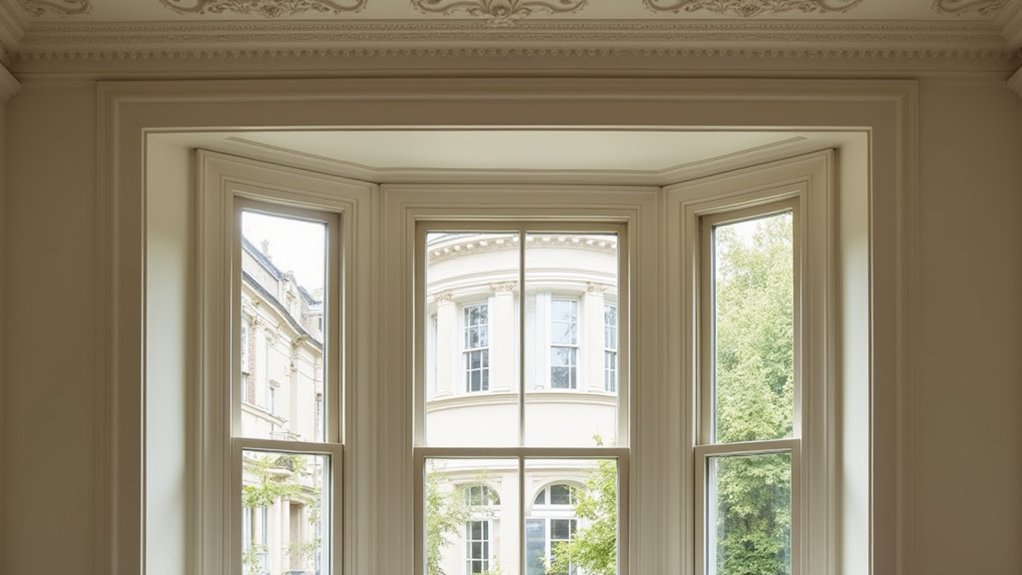
Original cornicing can anchor a room’s proportions, define the junction between wall and ceiling, and reinforce the architectural character of a period property. When you restore it, you retain the original profile, scale, and relationship with ceiling roses, architraves, and sash-window reveals.
Begin by recording surviving sections and identifying later paint layers, cracks, water damage, and missing mouldings. A skilled specialist can consolidate fragile plaster, recreate losses from a profile template, and blend repairs without flattening crisp details.
You’ll achieve historical accuracy by matching the cornice’s material, tooling, and decorative pattern to the building’s era rather than installing a generic replacement. Careful preparation and breathable finishes also protect the substrate from trapped moisture.
This approach safeguards architectural integrity, preserves room hierarchy, and helps your interiors continue to read as cohesive, authentic period spaces.
What Heritage Window Replacement Could Cost
You’ll need to budget for both heritage-grade materials and skilled labour, with costs varying by timber choice, glazing specification, and window complexity.
If your property is listed, you’ll also need consent before replacing historic sash windows, which can add design, survey, and approval fees.
These requirements can make replacement substantially more expensive than standard window installation.
Material and Labour Costs
Heritage window replacement costs depend on the frame material, glazing specification, joinery details, access, and whether the work requires planning or conservation approval. You’ll typically pay more for accurately matched hardwood, traditional putty glazing, slim double-glazed units, and bespoke mouldings than for standard softwood frames.
Historical accuracy increases surveying, pattern-making, and workshop time, while material longevity may justify denser timber, engineered sections, and durable paint systems.
Labour often covers removal, opening repairs, frame installation, draught-proofing, glazing, decoration, and final adjustment. Restricted access, upper-floor handling, scaffolding, and difficult reveals can add substantially to the quotation.
Ask contractors to separate materials, fabrication, site labour, finishes, disposal, and contingencies. Obtain detailed, like-for-like quotations, and confirm whether VAT, hardware, making-good, and future maintenance are included before you compare prices.
Listed Building Considerations
If the property is listed, you’ll usually need listed building consent before altering or replacing sash windows, even when the proposed work is intended to improve energy efficiency. Contact your conservation officer early; unauthorised work can require reversal, delay completion, and reduce value.
You’ll need measured drawings, photographs, specifications, and evidence explaining why repair isn’t practical. Authorities generally favour draught-proofing, discreet secondary glazing, repairs, and like-for-like timber components over wholesale replacement.
Heritage-grade joinery costs more because craftsmen must match sash profiles, glazing bars, pulleys, putty lines, and historic paint finishes. Budget for surveys, application fees, specialist labour, and potentially longer lead times.
Modern design and architectural innovation may be acceptable only where they respect significance. Confirm requirements with your council before commissioning work or comparing replacement quotations.
Make Sash Windows More Energy Efficient
To make sash windows more energy efficient, seal air leaks around the frame, install discreet brush seals or compression weatherstripping, and improve the glazing where appropriate. You can retain the original appearance while reducing draughts, external noise, and heat loss.
Carefully fitted secondary glazing often delivers excellent thermal performance without removing historic glass or altering the façade. Where regulations and sightlines permit, slim-profile double glazing may provide further gains, but check that the existing sashes and weights can accommodate its increased thickness and mass.
Pair these measures with insulation upgrades around reveals and window boards, taking care not to block ventilation or trap moisture. Repair loose joints, replace damaged putty, and maintain functional pulleys so the sashes close evenly.
You’ll improve comfort and lower heating demand while protecting architectural character.
How to Choose a London Restoration Specialist
When choosing a London restoration specialist, check their experience with heritage sash windows and period cornicing.
Verify craftsmanship standards by reviewing completed work, qualifications, and conservation methods.
You’ll also need to compare detailed quotations covering materials, repairs, finishes, timescales, and contingencies.
Check Heritage Experience
A London restoration specialist should demonstrate hands-on experience with period sash windows and traditional cornicing, not just general joinery or modern window installation. Ask how many projects they’ve completed in listed buildings, conservation areas, and other Victorian or Georgian properties.
Request case studies showing comparable window proportions, glazing bars, mouldings, and plaster details, then contact previous clients about the specialist’s understanding of original materials and construction methods.
You should also confirm familiarity with local conservation requirements and listed-building consent, because unsuitable alterations can damage heritage authenticity and create costly delays.
Discuss whether the team can identify timber species, historic glass, lime plaster, and traditional putty before work begins.
Their approach should support cultural preservation while improving draught control, security, and durability without erasing defining period features.
Verify Craftsmanship Standards
Inspect the specialist’s workmanship against measurable restoration standards rather than relying on photographs or general assurances. Ask to examine completed sash windows and cornicing in person, preferably on properties with comparable age, materials, and listed-building constraints.
Check whether timber repairs remain discreet, joints align tightly, profiles match original sections, and paint finishes are smooth without obscuring ventilation or drainage details. For sash windows, test cord movement, pulley operation, weight balance, meeting-rail alignment, and draught-proofing.
For cornicing, inspect moulded details, corner junctions, substrate preparation, and crack repairs under natural light. Request references from recent London clients and confirm who performs the work.
A reputable specialist should explain written craftsmanship standards, inspection stages, and remedial procedures. Ask what quality assurance records you’ll receive, including photographs, product data, and final sign-off.
Compare Detailed Quotations
Before appointing a London restoration specialist, compare like-for-like quotations that separate labour, materials, access equipment, surveys, finishing, and VAT.
Check whether each proposal covers removal, draught-proofing, timber repairs, pulley replacement, glazing, and redecoration.
Ask contractors to identify proposed timber species, repair resins, putty, glass thickness, and paint systems, then assess Material durability rather than choosing the lowest figure.
Require photographs, measured schedules, and descriptions of cornice mouldings, including how the contractor will match profiles and retain original fabric.
Confirm allowances for scaffolding, listed-building applications, waste removal, and unforeseen decay.
Historical accuracy should guide replacement decisions, so challenge generic “like-new” specifications.
Request programme dates, payment stages, insurance details, guarantees, and exclusions in writing.
Finally, compare VAT-inclusive totals and question unusually low allowances before signing.
Frequently Asked Questions
Do Restored Sash Windows Require Ongoing Maintenance?
Yes, you’ll need ongoing maintenance for restored sash windows. Inspect cords, pulleys, glazing putty, seals, and timber annually; repaint promptly, lubricate hardware, and address moisture. This protects window durability while controlling maintenance costs over time.
Are Planning Permissions Needed for Sash Window Restoration?
Usually, you won’t need planning permission for like-for-like sash window restoration, unless your property’s listed or lies in a conservation area. Check Historical preservation requirements and Building regulations with your council before starting work.
How Long Does Cornicing Restoration Typically Take?
Cornicing restoration typically takes two to six weeks, depending on damage, ornament complexity, and room size. You’ll achieve historical accuracy and craftsmanship quality through careful surveys, mould-making, repairs, painting, and curing.
Can Restored Windows Reduce External Noise in London Homes?
Yes, you can achieve meaningful External noise reduction by restoring sash windows: draught-proofing, repairing frames, and installing discreet secondary glazing improve Soundproofing benefits without sacrificing period character, though traffic noise may still require laminated glass.
What Guarantees Should Restoration Specialists Provide?
Think of guarantees as your safety net: restoration specialists should provide clear Warranty assurances covering defects, water ingress, operation, and finishes. Confirm documented craftsmanship standards, timelines, exclusions, remedial procedures, and insurance-backed protection before commissioning work.
Conclusion
Ultimately, restoring original sash windows and cornicing protects more than your London property’s appearance—it preserves its architectural story and market appeal. Think of these features as the building’s fingerprint: once erased, authenticity can’t be perfectly recreated. By repairing timber, improving draught-proofing, and matching decorative details, you’ll retain period character while gaining modern comfort. In conservation areas, this practical investment can also simplify approvals and strengthen buyer confidence, helping your home stand out and hold its value.