
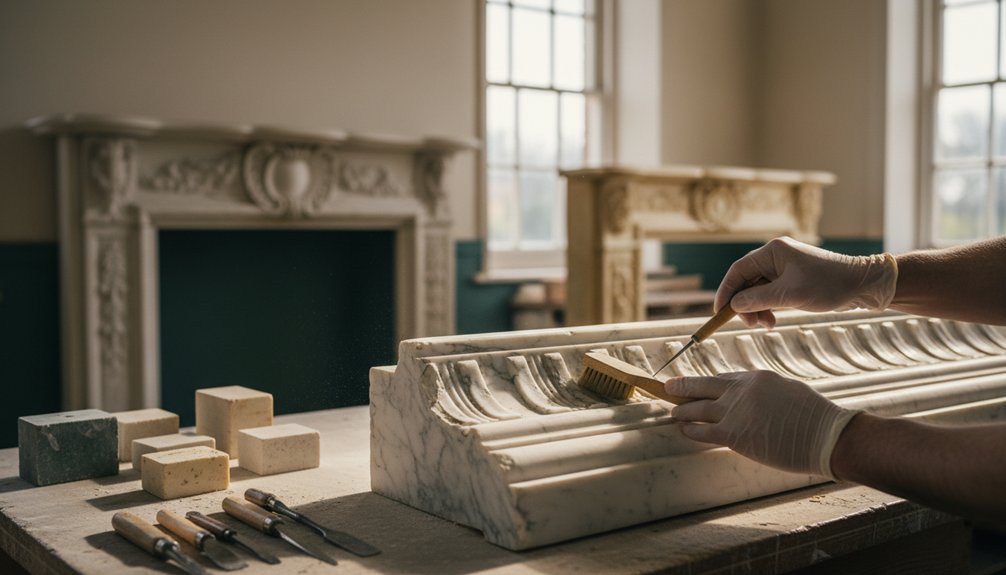
Restoring or sourcing an authentic marble surround for a Georgian fireplace requires more than choosing an attractive stone. You need to assess period proportions, carving, finish, veining, and signs of hand craftsmanship before deciding between reclaimed and bespoke work. Document existing damage, consult a conservator where necessary, and plan discreet structural support for installation. The right approach protects historic character while improving safety—and one overlooked detail can undermine the entire restoration.
Key Takeaways
- Identify authentic Georgian surrounds through restrained proportions, crisp hand-cut details, period-appropriate marble, traditional construction, and documented provenance.
- Match replacements to the fireplace’s original measurements, regional precedents, marble tone, veining, finish, and understated decorative details.
- Source reclaimed surrounds with verified dimensions, photographs, provenance, matching components, and evidence that their design remains historically intact.
- Before restoration, photograph and map cracks, chips, stains, repairs, looseness, coatings, and damage caused by moisture, heat, corrosion, or settlement.
- Install surrounds using compatible lime-based backing, discreet mechanical supports, careful handling, approved cleaning methods, and documented conservation procedures.
Identify Authentic Georgian Marble Surrounds
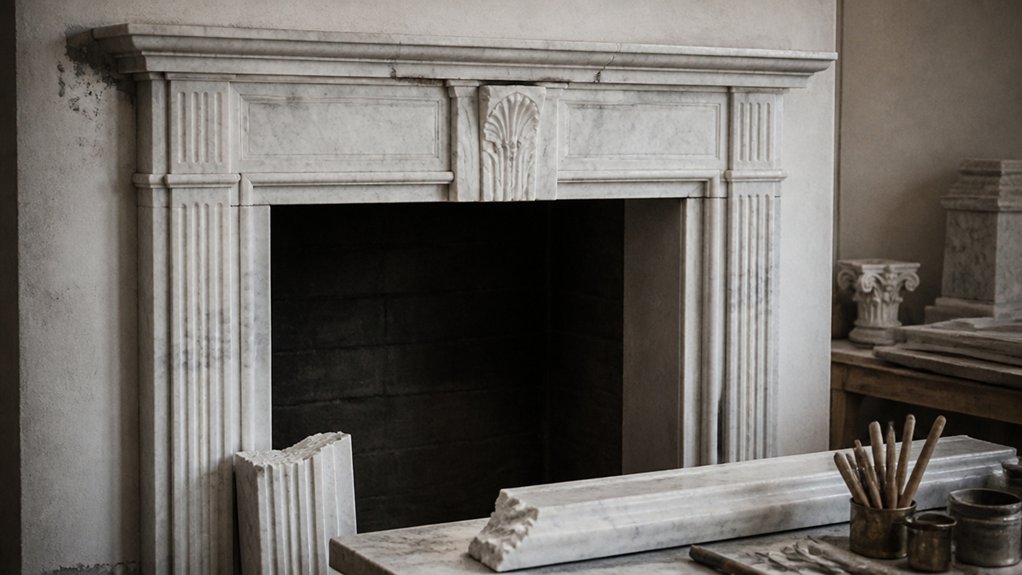
Authentic Georgian marble surrounds are distinguished by restrained proportions, crisp hand-cut detailing, and period-appropriate stone rather than elaborate ornament. When you assess a surround, begin with its construction. Look for carefully joined sections, shallow carving, consistent tool marks, and a fireplace opening suited to coal burning.
Examine the Marble color under natural light: Georgian examples commonly use white, grey, veined, or richly colored stone, with variation reflecting quarry sources and later polishing. Check the back and edges for old lime mortar, hand-finished surfaces, and signs of sympathetic repair rather than modern adhesive.
Historical context matters, too. Confirm the surround’s provenance, building date, and room setting through records, photographs, or comparable interiors. You’ll identify authenticity more reliably by weighing material, workmanship, age, and documentation together, not by relying on appearance alone.
Match Marble, Proportions, and Period Details
When matching a marble surround, start with the period proportions before selecting a replacement stone. Measure the opening, jamb depth, shelf projection, and overall height, then compare these dimensions with Georgian precedents from the same date and region.
Your replacement should preserve balanced pilasters, a restrained frieze, and a shelf that doesn’t overpower the room. Assess marble color under natural and artificial light; subtle veining and age-compatible tone usually look more authentic than dramatic contrast.
Examine the finish, too. Honed surfaces, softened edges, and hand-worked irregularities can distinguish period character from modern fabrication. Decorative carvings should match the fireplace’s status and chronology, whether plain mouldings, paterae, or delicate foliage.
Don’t combine elaborate ornament with modest proportions; every detail should support the surround’s architectural scale and heritage context.
Source Reclaimed or Bespoke Marble Surrounds
Source a reclaimed surround if its dimensions, stone, and surviving details align with the room’s period and proportions; otherwise, commission a bespoke piece from a specialist fabricator.
Reclaimed marble offers genuine age, established tooling marks, and subtle tonal variation that can strengthen a Georgian interior’s authenticity. Ask specialist dealers for provenance, original measurements, photographs, and evidence that the design hasn’t been substantially altered.
Examine matching slips, blocks, and hearth components as part of the purchase, but confirm that each element belongs together.
For a new surround, provide measured drawings, profile sections, corner details, and photographs of comparable period examples.
Choose a fabricator experienced in heritage work, traditional hand-finishing, and sympathetic Restoration techniques.
Discuss marble quarrying responsibly: a suitable current quarry may reproduce the required veining, while salvaged stone reduces demand for newly quarried material.
Obtain written specifications before commissioning.
Assess Damage Before Restoring Marble Surrounds

Before cleaning or dismantling a marble surround, inspect and record every defect, alteration, and loose component. Photograph each elevation, joint, fixing, and surface under consistent light, then map cracks, chips, staining, discolouration, spalls, and previous repairs.
Test questionable areas gently for hollowness, movement, or friability, but don’t scrape finishes or remove historic material.
Identify the marble type, vein direction, surviving polish, and evidence of paint, soot, wax, or inappropriate coatings.
Check whether damage reflects moisture, heat, corrosion, settlement, or earlier intervention; the cause must inform your treatment.
Consult a conservator before addressing deep fractures, unstable sections, or rare original details.
Record measurements and materials, retaining samples only when necessary.
Choose compatible Restoration techniques, and reserve Marble polishing for surfaces that can safely tolerate carefully controlled abrasion.
Install Marble Surrounds Safely and Correctly
Once the surround’s condition and treatment requirements are documented, plan its installation around the original construction and the marble’s weaknesses. Confirm dimensions, check the chimney breast, and photograph existing fixings before removal or positioning.
You’ll need a stable, level backing, compatible lime-based materials, and discreet mechanical support where necessary; don’t rely on adhesive alone for heavy Georgian components.
Lift each piece with padded equipment, keeping joints aligned and avoiding pressure on carved edges. Protect polished faces during handling, and complete Marble cleaning only with approved, pH-neutral methods after installation dust has settled.
Guarantee the fireplace opening remains correctly sized and unobstructed. Check Fireplace ventilation and have the flue assessed by a qualified professional before use.
Finally, test stability, document interventions, and retain original fixings whenever they remain safe and serviceable.
Conclusion
Restoring a Georgian marble surround isn’t simply a decorative upgrade; it’s a balance between preservation and practicality. Reclaimed stone carries authentic age, while bespoke work can reproduce lost proportions and details. By identifying period features, matching marble carefully, documenting damage, and using secure, discreet supports, you’ll protect both beauty and structure. Clean gently, maintain ventilation, and record every intervention. Your finished fireplace should look renewed—not new—honouring the craftsmanship and history that define its Georgian character.