You can add modern comfort beneath original period floorboards, but you’ll need to balance heat output, floor construction, cost, and conservation requirements. Start by checking whether the boards, joists, insulation, and subfloor can accommodate underfloor heating without trapping moisture or causing movement. Then compare electric and water-based systems, plan a reversible installation, and choose discreet smart controls that limit alterations. The right approach depends on details that aren’t always visible at first.
Key Takeaways
- Assess board species, thickness, moisture, fixings, and condition before choosing a reversible underfloor-heating installation method.
- Compare low-profile electric systems with water-based systems according to room size, heat-loss requirements, floor build-up, and available services.
- Lift, photograph, label, and store original boards carefully, protecting joists and avoiding unnecessary cutting, sanding, adhesives, or irreversible alterations.
- Add insulation and heat-spreading components carefully, maintaining ventilation, moisture control, manufacturer spacing, and clearly marked fixing exclusion zones.
- Integrate smart thermostats, floor sensors, zoning, and discreet wiring while testing signal strength, sensor accuracy, heat-up times, and fail-safe operation.
Check If Underfloor Heating Suits Your Floorboards
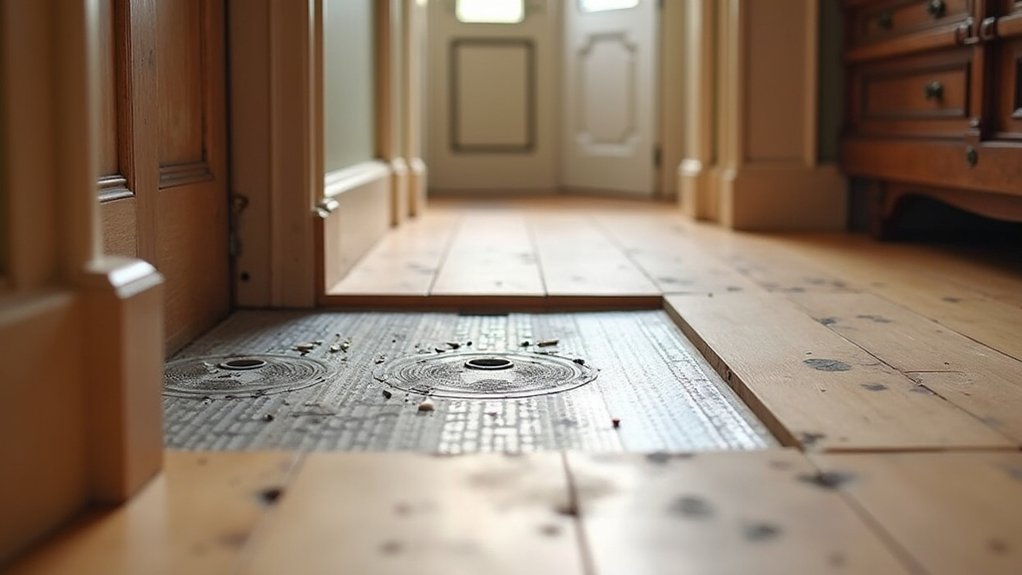
Before choosing a system, check whether your original floorboards can tolerate the heat, installation method, and any movement it may cause. Inspect their species, thickness, moisture content, fixing method, and existing condition.
Historic softwood or wide boards may expand, contract, cup, or split when temperatures and humidity fluctuate. Look for previous repairs, concealed services, uneven joists, and signs of decay before lifting anything.
Ask a conservation specialist to assess boards with unusual finishes, listed-building significance, or fragile patina. Confirm that the proposed installation won’t require excessive sanding, adhesive, or irreversible alterations.
Maintain surface temperatures within the timber manufacturer’s limits, and plan gradual commissioning after installation. These checks protect Historical authenticity while supporting responsible Flooring preservation.
If the boards remain unsuitable, retain them visibly and investigate less invasive heating options.
Compare Electric and Water Underfloor Heating
Once your boards pass the suitability checks, compare how each heating type affects the floor’s fabric, height, and future maintenance.
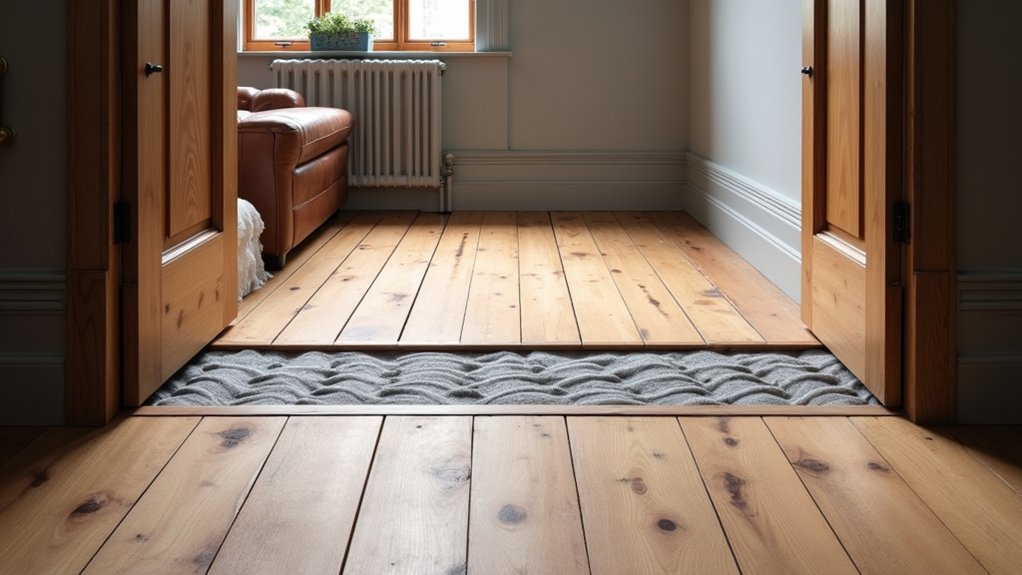
Electric systems use thin cables or mats, so you can often install them with minimal build-up beneath or between boards. They suit small rooms, awkward layouts, and sensitive structures, provided you protect cables from fixings and avoid crushing them.
Water systems circulate through flexible pipes, typically within grooved panels or a new structural layer. They need more careful coordination with joists, manifolds, insulation, and access points, but they can integrate neatly during a broader floor refurbishment.
Your choice should respect Vintage charm: retain original boards, reversible details, and breathable construction wherever possible.
Smart thermostatic controls add Modern efficiency, while accessible sensors and documented pipe or cable routes simplify future fault-finding without unnecessary disturbance.
Plan Around Costs, Heat Output, and Conservation
Budget for more than the heating kit: include floor preparation, insulation, controls, electrical or plumbing work, access panels, and careful reinstatement of the boards.
Ask installers for a room-by-room heat-loss calculation rather than relying on floor area alone. You’ll then understand the required output, flow temperatures, circuit spacing, and likely running costs.
Insulation beneath the system can reduce downward losses, but specify it carefully where ventilation, moisture movement, or shallow joists matter.
Confirm that your electrical supply, boiler, manifold, and controls can support the design without costly upgrades.
For Historical preservation, record existing materials and agree which boards, finishes, and thresholds must remain.
Prioritise Aesthetic integration: choose discreet sensors, compatible grilles, and controls that don’t compete with period details.
Allow a contingency for specialist surveys and unforeseen conservation requirements.
Install Heating Without Damaging Original Floors
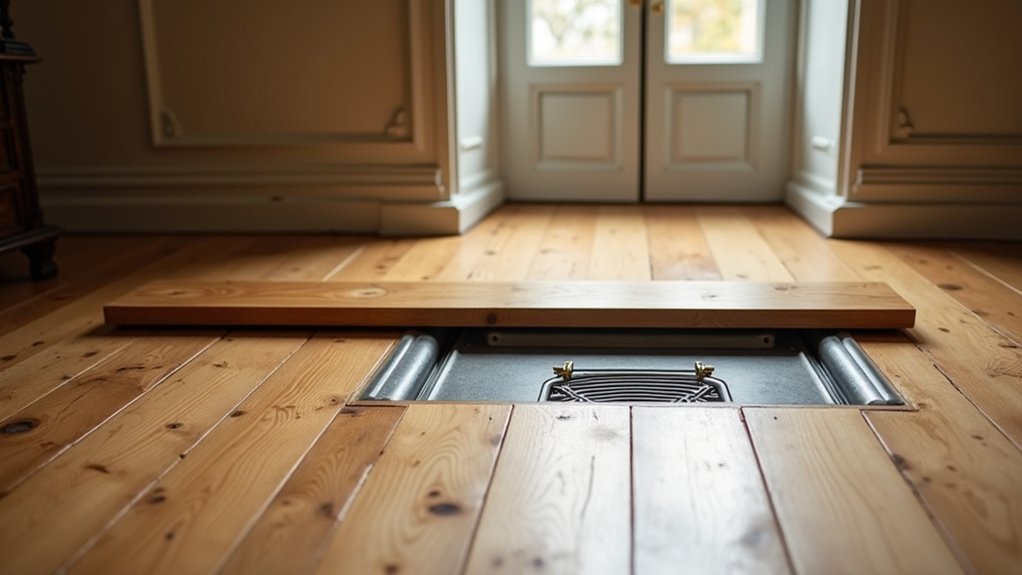
When installing underfloor heating beneath original period floorboards, lift and store boards systematically so you can return each one to its original position. Photograph every stage, label boards and mark joist locations before removing fixings.
Use a reciprocating saw only where necessary, setting the blade depth below the board thickness, and remove nails with controlled leverage to prevent splitting.
Inspect joists, correct uneven areas, and install heat-spreading plates without cutting structural members. Keep pipe runs within manufacturer spacing and protect them from fasteners with marked exclusion zones.
Replace damaged boards with matching reclaimed timber rather than covering defects. Allow timber and insulation to acclimatise, then refit boards with compatible screws through existing holes where possible.
This approach supports Historic preservation while protecting Floor durability and minimising irreversible alterations.
Set Up Smart Controls for Underfloor Heating
Choose a smart thermostat and control system that supports underfloor heating, the heat source, and any existing zoning equipment before connecting components. Confirm whether your system uses electric mats or hydronic circuits, then install the manufacturer’s receiver, floor sensor, and wiring centre as specified.
Position the sensor correctly, away from direct heat sources, and test its resistance before closing the floor. Smart thermostats let you set schedules, maximum floor temperatures, and room-based comfort levels, protecting historic boards from excessive heat.
Wireless controls can simplify installation where new cables would disturb original finishes, but check signal strength and use a reliable mesh network. Label every zone, pair each thermostat, and commission actuators individually.
Finally, verify heat-up times, sensor readings, and fail-safe shut-off operation before saving your schedule.
Frequently Asked Questions
How Do I Maintain Original Floorboards After Installing Underfloor Heating?
You’ll protect original boards through Floorboard preservation: maintain stable humidity, limit heating changes, monitor surface temperatures, and inspect regularly. Confirm Heating compatibility, avoid excessive heat, use breathable finishes, and repair gaps promptly with matching timber.
Can Underfloor Heating Affect Indoor Air Quality or Household Allergies?
Underfloor heating usually improves Indoor air by reducing drafts and avoiding radiator convection, but it won’t eliminate Household allergies. You’ll still need ventilation, filtration, humidity control, and regular cleaning to limit dust mites, mould, and pollutants.
What Flooring Finishes Are Safe to Use Over Heated Period Floorboards?
Choose breathable, low-resistance finishes: hardwax oil, water-based polyurethane, or compatible engineered timber. Confirm floorboard compatibility, limit thickness, and avoid insulating underlays; excessive heating insulation restricts heat transfer and risks timber movement.
How Long Does Underfloor Heating Typically Take to Warm a Room?
You’ll typically wait 30–90 minutes for underfloor heating to warm a room, depending on insulation, floor construction, and system type. Heating efficiency improves with insulation, while Warm up duration increases beneath thick floorboards.
Can Furniture Placement Restrict Heat Distribution Beneath Original Floorboards?
Yes, furniture obstruction can restrict Heat circulation, but it rarely blocks heat completely. You’ll maintain performance by avoiding thick rugs, leaving airflow beneath cabinets, and distributing large furniture pieces across the heated floor evenly.
Conclusion
With careful planning, your period floorboards can remain the building’s visible history while smart underfloor heating works quietly below—a modern pulse beneath an old timber surface. Confirm the boards’ condition, choose electric or hydronic technology according to heat demand, and balance installation costs with conservation requirements. Lift and refit each board methodically, then use discreet sensors and wireless controls. That way, you’ll gain efficient, responsive comfort while preserving the floor’s character, reversibility, and craftsmanship.