
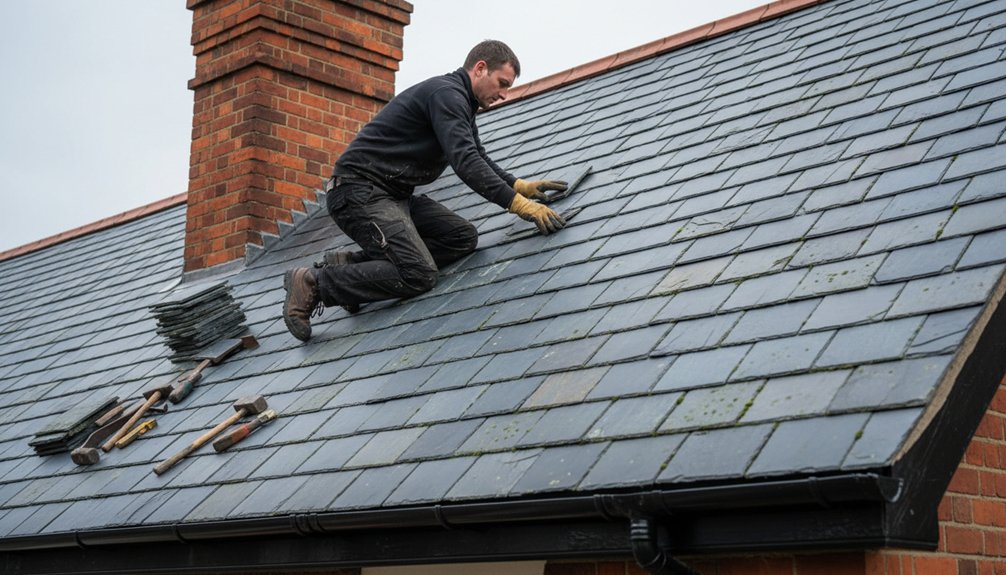
When you lay reclaimed Welsh slate on a Victorian roof, you’re preserving more than a weatherproof covering—you’re retaining its historic proportions and craftsmanship. Start by inspecting the structure, then sort sound slates, match diminishing courses, and confirm the required headlap before fixing anything. Conservation rules may also affect your choice of materials and details. Get these foundations wrong, and even excellent slate won’t perform; the most demanding work begins where the roof meets its verges, valleys, and junctions.
Key Takeaways
- Inspect rafters, battens, junctions, and damp paths before work, addressing structural defects and leaks without removing sound historic fabric.
- Select reclaimed Welsh slates with sound surfaces, intact edges, compatible dimensions, and verifiable provenance.
- Sort slates by size and thickness, calculate gauge and headlap, and replicate the Victorian diminishing-course pattern.
- Use compatible underlay, ventilation, battens, and copper or stainless-steel fixings suited to the slate and exposure.
- Lay courses accurately with staggered joints, preserve weathered edges, and carefully detail verges, valleys, chimneys, and abutments.
Inspect the Victorian Roof Structure First
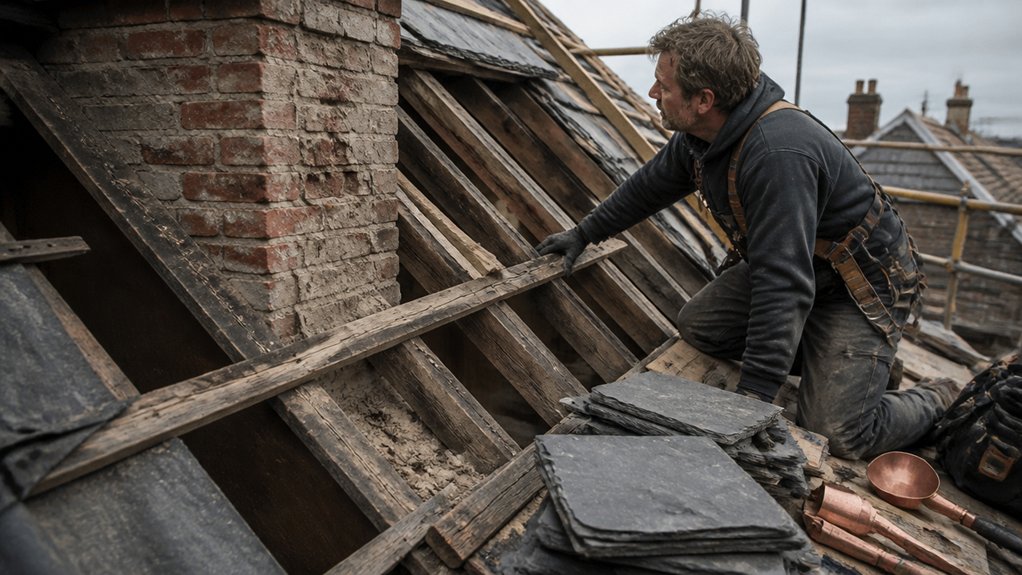
Before lifting a single reclaimed slate, inspect the Victorian roof structure for movement, decay, and inappropriate alterations. Check rafters, purlins, wall plates, and trusses for deflection, fungal decay, insect damage, and weakened joints.
Trace damp paths around valleys, abutments, chimneys, and eaves, then identify leaks’ causes rather than masking their symptoms. Confirm that historic timbers remain adequately supported and that later repairs haven’t introduced incompatible loads or rigid connections.
Examine underlay, battens, fixings, and flashing details only to understand the existing assembly; don’t remove sound fabric unnecessarily. Assess roof ventilation at eaves and ridge, preserving discreet airflow without sacrificing weather tightness.
Record every finding with measured drawings and photographs, and consult a conservation professional where structural intervention may affect historical preservation. Establish a repair sequence before any covering work begins.
Choose Sound Reclaimed Welsh Slate
Choose slates with sound surfaces, intact edges, and no excessive delamination or frost damage.
You’ll need to check their size and thickness against the Victorian roof’s existing courses and fixing pattern.
Confirm Welsh provenance through reliable salvage records or supplier documentation to preserve the roof’s historic character.
Assess Slate Condition
Sound reclaimed Welsh slate should show a dense, even surface with no structural cracks, delamination, or severe edge loss, while minor weathering and nail holes may be acceptable as evidence of age. Examine each piece in good light, brushing away dirt without aggressive cleaning that could erase historic patina.
Tap the slate gently with a knuckle or timber tool: a clear, ringing response suggests integrity, whereas a dull sound may indicate hidden fractures. Reject pieces with powdering faces, deep frost scars, unstable laminations, or edges too fragile to handle.
Check old nail holes for splitting, and set aside any slate that flexes or crumbles. Sound selection protects the roof’s character and supports Slate durability.
Reusing serviceable material also reduces environmental impact, preserving embodied energy and limiting quarry demand. Keep questionable pieces for cutting only where conservation practice permits.
Check Size and Thickness
After setting aside cracked or friable pieces, measure the remaining slates for length, width, and thickness. Record each result, noting variations rather than forcing every piece into a single standard.
Slate thickness affects handling, coursing, nail choice, and the roof’s finished appearance, so keep unusually thin slates for suitable upper courses or verge work, where appropriate.
Compare widths and lengths with the existing roof, allowing your Slate size selection to preserve its established rhythm and lap.
Group slates by compatible dimensions before you begin laying; this reduces excessive sorting on the scaffold and helps you maintain consistent courses.
Reject pieces whose edges, holes, or thickness changes would compromise sound fixing.
Handle every slate carefully, because reclaimed material can split along old nail lines even when its face appears sound.
Verify Welsh Provenance
Welsh provenance matters when you’re matching reclaimed slate to a Victorian roof, because local stone carries the colour, grain, and weathering character that define its historic appearance. Ask the supplier where each batch was recovered and request evidence linking it to a Welsh quarry or regional building tradition.
Don’t rely on colour alone: Welsh authenticity depends on mineral composition, cleavage, thickness, and tooling marks, all of which can resemble imported slate after decades of exposure. Examine pallets for consistent geology, discarded labels, and matching dimensions, then separate doubtful pieces before delivery.
Where available, obtain slate certification or documented chain-of-custody records, and retain them with your project file. If evidence remains uncertain, consult a conservation roofer or building archaeologist before fixing the slates.
Match Slate Sizes, Courses and Quantities
Before you lay reclaimed slate, sort it by length, width, thickness, and edge profile so each course follows the Victorian roof’s original proportions.
Establish the slate pattern from surviving roof evidence, noting diminishing courses, margins, and any deliberate variation in width.
Measure the rafter length and calculate gauge from the slate’s cover, allowing consistent headlap without forcing mismatched pieces into place.
Keep thicker slates toward lower courses where appropriate, then reserve thinner, narrower units for higher courses if that reflects the historic arrangement.
Dry-lay representative sections on battens to check course alignment, sidelaps, colour, and surface texture before fixing.
Count usable slates by course, adding a carefully judged allowance for breakage and cutting.
Set aside damaged pieces for discreet repairs, not prominent elevations.
Make certain each replacement respects the roof’s established rhythm.
Check Regulations Before Reroofing
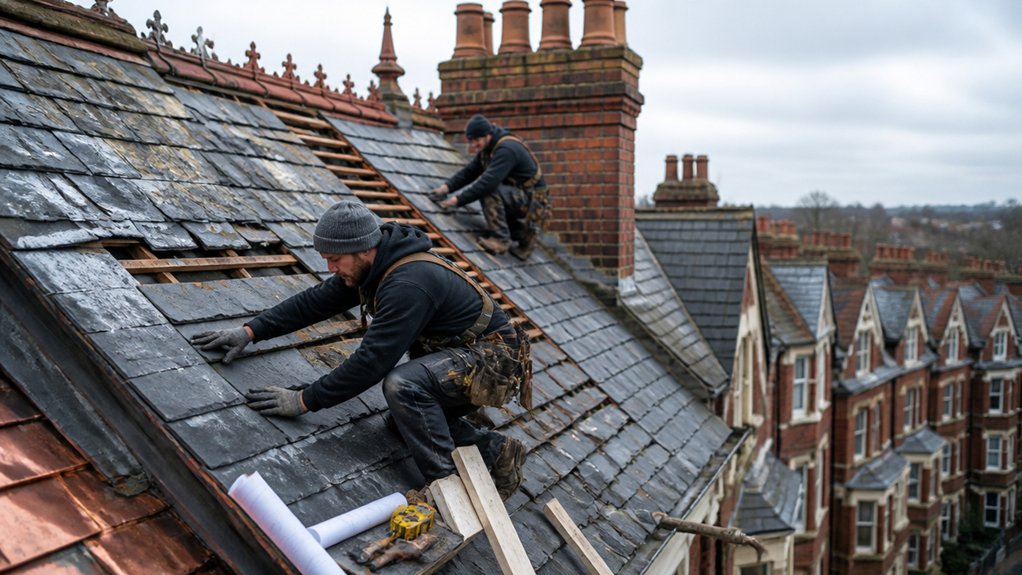
Check with your local planning authority and building control before stripping the roof, as a Victorian slate roof may fall within a listed building, conservation area, or locally protected setting. You may need listed-building consent, planning permission, or building permits, particularly if you’ll alter the roof profile, coverings, structure, or visible details.
Ask whether the council requires a heritage statement, photographic record, or a method statement describing careful slate removal and reuse.
Building control may also assess structural safety, thermal performance, fire precautions, and weather resistance, but heritage requirements can limit modern alterations.
Confirm environmental regulations before disposing of broken slate, timber, or old underlay; arrange licensed handling where contamination or hazardous materials exist.
Keep written approvals, specifications, and surveys on site, and don’t order materials or begin demolition until every condition is clear.
Prepare Battens, Underlay and Fixings
You’ll need to install sound, accurately gauged battens at the correct spacing for the reclaimed Welsh slates.
Select a breathable underlay that suits the Victorian roof’s construction, and avoid trapping moisture within the historic fabric.
Use compatible copper or stainless-steel fixings, sized for secure, durable fastening without damaging the slates.
Install Roof Battens
With the Victorian roof stripped and its structure confirmed sound, prepare straight, graded battens, a breathable underlay, and corrosion-resistant fixings suited to reclaimed Welsh slate.
Set out batten gauges from the slate’s actual length and required headlap, rather than relying on modern standard sizes.
Mark courses carefully, allowing for eaves, verges, abutments, and any changed geometry across the historic roof.
Fix battens level over sound rafters, using appropriately sized galvanised or stainless-steel nails; stagger joints and keep them supported, avoiding weak or split timber.
Preserve existing ventilation paths at eaves and ridge, since roof ventilation helps manage moisture without altering the building’s character.
Don’t confuse this work with slate cleaning: retain weathered surfaces and handle every salvaged slate gently.
Check alignment continuously with a straightedge before covering the work, correcting discrepancies while access remains easy.
Select Underlay and Fixings
Select a vapour-permeable, roofing-grade underlay that suits the exposed conditions and allows the Victorian roof to dry without trapping moisture against the rafters or reclaimed slates. Your Underlay selection should follow the manufacturer’s guidance, local weather exposure, and conservation requirements.
Lay it smoothly over the prepared battens or rafters, maintaining drainage laps and securing edges without excessive tension. Don’t block ventilation paths at the eaves, ridge, or abutments; use compatible detailing to prevent wind-driven rain and debris entering the roof build-up.
Check Fixings compatibility before laying slates. Choose copper or stainless-steel nails appropriate to the slate thickness and atmosphere, avoiding galvanised steel where corrosion could stain or weaken the covering.
Match hook, clip, and screw materials carefully, and retain sound historic battens only after confirming their strength, spacing, and alignment. Replace defective timber with treated, suitably sized battens.
Lay Reclaimed Welsh Slate Correctly
Once the reclaimed slates have been graded and batten spacing confirmed, lay them in diminishing courses from the eaves towards the ridge, preserving the Victorian roof’s original rhythm.
Keep each slate aligned with its neighbours, maintaining consistent laps and avoiding forced pieces. Use sound slates in exposed positions, because careful selection supports slate durability without sacrificing historic fabric.
Fix every slate with appropriately sized copper or stainless-steel nails, driving them firmly but not so tightly that thermal movement causes cracking.
Stagger joints between courses, and trim only where necessary with a slate hammer, retaining naturally weathered edges wherever possible.
Check each course from ground level as you progress; small corrections remain easier before the next course covers your work.
This disciplined approach protects roofing aesthetics and respects original workmanship.
Weatherproof Verges, Valleys and Junctions
At verges, valleys and roof junctions, preserve the Victorian detailing while creating continuous, weather-tight protection. Set slates into sound, traditional timberwork, replacing only decayed sections with matching, seasoned material. Use appropriate Flashing techniques: form lead soakers beneath each slate course, step flashings up abutments, and secure cover flashings without trapping water or relying on excessive sealant.
In open valleys, retain adequate width for run-off and dress lead smoothly over a continuous, ventilated substrate. At verges, finish with carefully cut slates and discreet mortar or leadwork that matches the original profile.
Check every junction around chimneys, dormers and rooflights, allowing movement without cracking. Select Ventilation options that maintain airflow beneath the slates while avoiding conspicuous modern grilles.
After rain, inspect for ponding, lifted edges and staining, then correct defects promptly.
Conclusion
By inspecting the structure, selecting sound reclaimed slates, and matching diminishing courses carefully, you’ll protect both the roof and its Victorian character. Use compatible battens, breathable underlay, copper or stainless-steel fixings, and correct headlap throughout. Give particular attention to lead soakers, valleys, verges, and abutments, while observing conservation requirements before work begins. Done properly, your roof won’t merely weather the years; it’ll stand the test of time, preserving its heritage for generations.